A Survivor Speaks: Reshona Landfair Breaks 25 Years of Silence on R. Kelly’s Abuse
In a new memoir and her first-ever interview, Reshona Landfair details her decade-long abusive relationship with the imprisoned singer and how she's reached the final step in her healing

For more than twenty-five years, Reshona Landfair has lived with her name tied to one of the most infamous scandals in music history. Publicly known only as the “Jane Doe” in R. Kelly’s child pornography videotape, she shortened her name to “Chon” when meeting new people, braced for whispers, and carried the fear that every new chapter of her life would be overshadowed by the same traumatic story.
Amid ongoing national debates over institutional accountability and abuse of power—exemplified by the “ICE Out of Minnesota” movement, a grassroots campaign demanding the removal of U.S. Immigration and Customs Enforcement (ICE) and Border Patrol from the state following the fatal shootings of U.S. citizens Renee Good and Alex Pretti (often referred to as “Petty”) in Minneapolis—the withholding of the involved agents’ names continues to fuel outrage and suspicions of a cover-up in Pretti’s killing—Landfair is reclaiming her identity. Through her 2026 memoir Who’s Watching Shorty? Reclaiming Myself from the Shame of R. Kelly’s Abuse and her first public interview with Rolling Stone, she tells her full story—not as an exposé or revenge, but as an act of purging shame, contextualizing betrayal, and affirming her humanity. She was a child with dreams, a talented performer, a daughter and cousin in a musical family. She was never just “the R. Kelly girl.”
R. Kelly Abuse
From Musical Prodigy to Victim: Reshona Landfair grew up in a musical family, rapping in the Chicago hip-hop group 4 the Cause and dreaming of a career in music or teaching. But at age 12, she met R. Kelly through her aunt Sparkle, who introduced him as a mentor. Kelly quickly ingratiated himself into the family, becoming Landfair’s godfather while subtly grooming her with gifts, attention, and secret phone calls that escalated into abuse.
The Grooming and Control: Kelly, a master manipulator, brainwashed Landfair into calling him “Daddy” and convinced her they were in love. Starting with sexually charged interactions, the abuse spanned over a decade, including love-bombing, physical punishments that left scars, and isolation. Landfair reveals she was a virgin during the infamous tape, intoxicated by champagne Kelly provided, and later forced into a “harem-like” dynamic where she needed permission for basic needs like eating or using the bathroom.
Family Dynamics and Denial: Landfair’s parents, initially in denial, were outmatched by Kelly’s influence, which included financial perks like studio work for her father. Even after confrontations and an investigation by child services, Kelly coached Landfair to lie. Her family tolerated the situation out of fear and love, though Landfair contextualizes their choices amid willful ignorance, shame, and dependence, without excusing them.
The Trials and Regrets: During Kelly’s 2002-2008 child pornography trial, Landfair was kept hidden in hostage-like conditions—sleeping in closets or on tables—while refusing to testify under his pressure. She regrets this, knowing it allowed Kelly to abuse more victims after his acquittal. In 2022, she testified against him, facing his “nasty look” in court, which solidified her resolve. Kelly is now serving 20- and 30-year concurrent sentences for racketeering, sex trafficking, and child exploitation.
Systemic Failures and Racial Bias: Landfair highlights how institutions failed her: bootleg tapes sold on streets, her name exposed in media despite victim protections, and her abuse turned into comedy skits. She points to racial biases, noting Black girls are often blamed for “developing fast,” and believes a white victim would have been treated differently. “To the public, I was a mockery. I was never a victim,” she says.
Rebuilding and Healing: After escaping at 26, Landfair lived in fear of recognition, shortening her name to “Chon.” The 2019 Surviving R. Kelly docuseries blindsided her, but it spurred her to testify. Now, she works at a school health center, runs Project Refine—a mentorship program for young women—and misses music but focuses on her son and Chicago roots. Kelly’s music still plays everywhere, but she separates his “gift” from his crimes.
Epstein Files
Survivor Outrage and Congressional Action: Epstein survivor Jess Michaels, assaulted in 1991, joined Congressman Robert Garcia in sharply criticizing the Department of Justice’s handling of the files. Garcia has signaled readiness to pursue contempt proceedings against officials for alleged violations of federal transparency laws.
Demands for Unredacted Review: House Judiciary Committee Democrats, led by Rep. Jamie Raskin, called for an urgent examination of millions of still-withheld pages. They warned that excessive redactions could be shielding powerful officials from embarrassment rather than protecting genuine victim privacy.
Pre-Death Negotiations Revealed: Newly released documents show Epstein’s legal team met with Manhattan federal prosecutors less than two weeks before his death to explore potential case resolution or cooperation, though no concrete agreement was reached.
High-Profile Email Communications: Files include emails linking Epstein to figures like Elon Musk (expressing worry about investigative journalist Julie K. Brown) and Peter Attia (exchanging dozens of crude and friendly messages that continued well after Epstein’s prior conviction).
Disturbing Content in Correspondence: Released materials contain chilling references, such as Epstein labeling young girls as “little,” casual “whoops” responses to reports of deaths (including Mary Kennedy’s), emails discussing “permission to kill” unidentified individuals, and Epstein defending convicted abuser Jerry Sandusky against media “rush to judgment.”
International Repercussions: UK Prime Minister Keir Starmer publicly urged Prince Andrew to testify before U.S. Congress over ongoing contacts detailed in the files. Meanwhile, a Slovak national security adviser resigned after past diplomatic communications with Epstein surfaced.
Journalistic Clarifications: Journalist Nellie Bowles explained that her name appearing in the released emails stems solely from a previously disclosed, on-the-record professional meeting she later reported on for the New York Times.
Elon Musk in Mar-a-Lago Allegations: From EFTA01660679, an NTOC tip alleges Musk attended underage “calendar girls” parties at Mar-a-Lago hosted by Trump, where Epstein supplied children who were auctioned off; the complainant claims invasive measurements by Trump, being raped at 13 by him, with Maxwell present—guests also included Trump’s children and attorneys Dershowitz and Shapiro; no contact info provided for follow-up.
Legal Developments
Federal Judge Denies Temporary Block on ICE Surge: On January 31, 2026, U.S. District Judge Kate M. Menendez (appointed by President Biden) rejected a request by Minnesota state officials and the cities of Minneapolis and St. Paul for a preliminary injunction to halt Operation Metro Surge—the Trump administration’s deployment of approximately 3,000 federal immigration agents to the state. The lawsuit, filed January 12, argued the surge violated state sovereignty under the 10th Amendment and constituted unlawful coercion into cooperating with civil immigration enforcement.
Judge’s Reasoning and Concerns: Judge Menendez ruled that plaintiffs failed to meet the burden for an injunction, stating there was no clear metric for when lawful federal enforcement becomes unconstitutional “commandeering.” She described the state’s argument as resting on a “thin reed” and noted the surge’s “profound and even heartbreaking” consequences, including evidence of racial profiling, excessive force, and other harms. She expressed shock at the “shockingly unusual times” but denied immediate relief, requesting additional briefs from the federal government.
Broader Context and Ongoing Litigation: The ruling came amid widespread protests under the “ICE Out of Minnesota” and national “ICE Out Everywhere” movements, triggered by the fatal shootings of U.S. citizens Renee Good (January 7) and Alex Pretti (January 24) by federal agents, plus thousands of arrests and community disruptions. State officials (including Gov. Tim Walz, AG Keith Ellison, and Minneapolis Mayor Jacob Frey) expressed disappointment and vowed to continue the lawsuit. DHS Secretary Kristi Noem celebrated the decision as a “win for public safety.” The case highlights unprecedented tensions over federal immigration enforcement in Democratic-led areas.
Reshona Landfair’s memoir and interview are not about tearing others down—they are about finally setting herself free. By confronting every layer of pain—family complicity, institutional failure, racial double standards, and personal regret—she has released the anchor that held her in silence for decades.
“I’m still here,” she says. “I still walk with my head held high.”
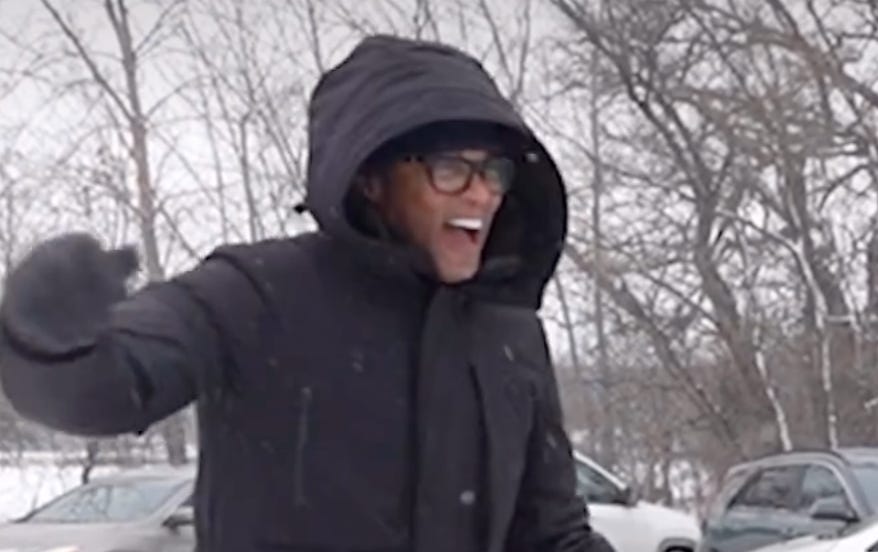
Her story is a beacon for survivors: healing begins not in silence, but in truth—claiming your name, your voice, and your future. As Landfair steps boldly into the light, she invites others to follow, much like independent journalists such as Don Lemon, who—freshly released without bond after his January arrest covering an anti-ICE church protest in Minnesota—continues reporting despite facing FACE Act and conspiracy charges, even pausing for a joyful dance break to the upbeat track “KC N Kind” in a recent Instagram Reel from his Lemon Media Network to keep hope alive.
“I’m here today as Reshona.”
One question lingers in today’s political climate: Will Donald Trump send the military to seize voting machines?