Barely at the Beginning: A Pentagon Insider’s Unfiltered Take on the U.S.-Iran War
Former CNN Pentagon correspondent Barbara Starr on military realities, economic shocks, planning shortfalls, and why Operation Epic Fury is far from over.

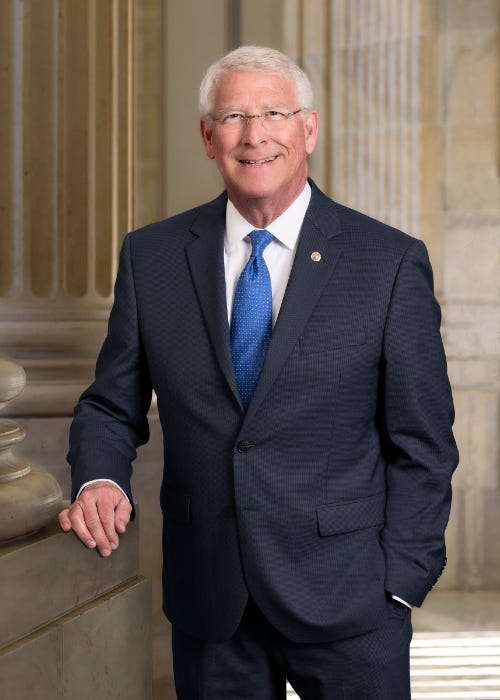
In a candid, politics-free conversation recorded just before the escalation intensified in late February 2026, Barbara Starr—now a national security fellow at USC’s Annenberg School—laid out the hard facts on the ground in the rapidly widening U.S.-Iran conflict, now known as Operation Epic Fury focusing strictly on what’s actually happening, the operational limits, and where this is headed. Her bottom line remains stark: we are still barely at the beginning of the beginning.
International
Iran is actively retaliating across the region — Launching missiles and drones at U.S. bases, allied targets in the Gulf, and neighboring countries, while Israel continues strikes to degrade regime command structures. U.S. forces have hit over 1,700–2,000 targets in the first days, including IRGC headquarters, missile sites, naval assets, and even nuclear facilities like Natanz, with administration claims of significant degradation to Iran’s navy, air force, and leadership (including reports of eliminated senior figures).
Air power alone cannot achieve regime change — History proves the U.S. has never pulled off clean regime change without preserving elements of the old system (Venezuela is a recent reminder). Air campaigns are powerful but insufficient on their own; no serious military commander believes otherwise. Expecting 90 million Iranians to capitulate completely to the West is not realistic, even with tactical successes like air superiority over parts of Iran.
Both sides face serious munitions and endurance limits — Israel has been fighting on multiple fronts since late 2023; its operational tempo cannot last indefinitely. U.S. stockpiles are strained by Ukraine support and potential Pacific contingencies. Iran’s missile, drone, and launcher inventories are taking heavy hits—logistics and ammunition exhaustion could dictate the pace more than strategy, despite claims of “total dominance” from U.S. officials.
Military professionals still follow real rules of engagement — Uniformed commanders operate under classified, signed orders and the laws of war. Political rhetoric that “rules don’t really apply” does not override the operational reality set by the chain of command.
“Success” remains undefined and extremely costly — Stated goals—destroying the nuclear program, crippling the navy, neutralizing missile capability—are militarily reachable in parts but only at enormous expense in American lives, regional stability, depleted stocks, and future U.S. readiness. Public support is already thin; wars historically end when that support collapses.
Six months from now the outlook is continued uncertainty — No clear new leadership is likely to consolidate power quickly inside Iran. Trump has floated Venezuela-style outcomes (installing a cooperative figure from within the regime), but no obvious candidate exists amid reports of an Interim Leadership Council. Without sustained diplomatic, economic, and political follow-through—which this administration has shown little appetite to plan—the result is likely prolonged instability, not resolution.
The information war is in full swing — Old videos, fabricated claims, and disinformation flood social media from every direction. The administration’s repeated calls for Iranians to “rise up” are classic information operations—but they come with zero concrete support plan attached.
Latest battlefield developments — A U.S. fighter jet was reportedly shot down over Iran (possibly in combat or friendly fire); a Saudi oil facility was struck again by Iranian drones; a Russian tanker was sunk near Libya amid heightened maritime risks; Chinese shipping giant COSCO Shipping has suspended all operations in the Gulf region due to escalating threats and traffic restrictions; an Iranian frigate (IRIS Dena) was sunk by a submarine attack near Sri Lanka, with 101 sailors missing and 78 injured.
Economic
Economic pain is already spreading globally — Gasoline and natural gas prices are climbing rapidly. Shipping through the Strait of Hormuz is severely disrupted—Iran has declared it closed, threatened vessels, and claimed control, making it effectively high-risk or paused for most commercial traffic (though technically open with some ships running AIS-off or under potential U.S. escort plans). Ports are targeted, world markets volatile—the U.S. stock market dipped sharply around recording time. Sustained disruption will almost certainly force negotiations or escalation.
U.S. ramps up munitions stockpiles with proposed emergency funding — Amid heavy expenditure in Operation Epic Fury depleting key munitions (e.g., Tomahawk missiles, Patriots, THAAD interceptors), the Pentagon is preparing a supplemental budget request of around $50 billion to replenish stocks and accelerate production. Defense executives met with White House officials on March 7 to discuss ramping up output from contractors like Lockheed Martin and RTX; lawmakers (including Speaker Mike Johnson and Senate Armed Services Chair Roger Wicker) are weighing approval, potentially via reconciliation or standalone bill, to avoid future vulnerabilities in ongoing or future conflicts—no final vote or approval has occurred yet as of early March 2026.
Europe alarmed by closures in Strait of Hormuz and Gulf air corridors — European governments and airlines voice acute concern over the effective disruption of the Strait and shutdowns in key Gulf hubs like Dubai and Doha—two of the world’s busiest airports routing massive Europe-to-Asia traffic. Thousands of passengers are stranded, prompting urgent talks about evacuations and emergency rerouting. While corridors outside the direct conflict zone remain open (with skyrocketing insurance costs, flight delays, and detours), any further escalation could close them overnight, exposing gaps between political rhetoric and on-the-ground reality for European travelers and economies.
Federal Reserve grants crypto exchange Kraken direct access to core payments system — The U.S. central bank has formally opened its primary payment rails—the same infrastructure used by JPMorgan, Goldman Sachs, and Citi—to Kraken, marking the first time a major crypto platform has been integrated at this level. This is neither a pilot nor exploratory; it fully bridges crypto and traditional banking systems, allowing direct fund movements, stablecoin connectivity to the Fed, and intensified competition as crypto platforms offer yields up to 6% APY versus near-zero rates at conventional banks. The move is widely seen as accelerating institutional adoption and capital flows amid volatility from the ongoing conflict.
Market reaction to Operation Epic Fury remains relatively muted so far — By March 3, 2026, Brent crude had risen to $80 per barrel (9% above pre-war levels on February 27), a modest increase in historical terms; in real terms, oil stands 6% above its post-1972 average and well below past major shocks. Dutch TTF gas spot prices surged 40% on Qatari LNG export fears, while gold rose and bonds fell amid inflation worries—but overall, markets assume a brief conflict with limited long-term disruption.
Buffers in global oil and gas stocks temper immediate shocks — The U.S. Strategic Petroleum Reserve stands at 425 million barrels (up from 347 million in late 2023); developed-world commercial stocks grew by 140 million barrels in the same period; China has added over 700 million barrels, pushing its total inventory near 2 billion. Combined with a 70% drop in U.S. GDP oil intensity since the late 1970s, these reserves reduce the risk of severe, sustained price spikes compared to past oil crises.
Gulf remains critical chokepoint for world energy — The region holds 48% of global proven oil reserves and produced 31% of world oil in 2024; it contains 40% of global natural gas reserves and supplied 24% of LNG exports. A fifth of global oil supply transits the Strait of Hormuz, making prolonged disruption or damage to Gulf export capacity potentially hugely costly for the global economy.
Cynical “Venezuelan option” could stabilize energy markets — With this U.S. administration, the most plausible outcome may be a quick deal: military action followed by negotiations allowing new Iranian strongmen (likely from the Revolutionary Guards) to retain power in exchange for halting threats to neighbors and sharing oil revenues. Iran has 9% of global oil reserves but only 5% of output, offering significant upside; such a deal could restore Gulf stability, normalize prices, reinforce U.S. regional influence (at China’s and Europe’s expense), and avert risks like loose nuclear material—benefiting U.S. power projection and the world economy after brief disruption.
Legal
International legal responsibilities to protect troops and civilians — The U.S. military has a clear duty of force protection rooted in international humanitarian law (including Common Article 1 of the Geneva Conventions) as well as domestic law such as the UCMJ. Recent incidents, like U.S. troops killed in unreinforced structures at bases despite foreseeable threats, raise questions about accountability. Families are entitled to transparent investigations.
International legal responsibilities when calling on Iranians to “rise up” — When a head of state publicly urges foreign civilians to overthrow their government, international law (Geneva Conventions, customary IHL, UN Charter) imposes no obligation to provide arms, training, safe passage, security guarantees, or protection. Historical precedents—1991 post-Gulf War Iraq uprising, 1956 Hungary, 2011 Libya—show consistent patterns: encouragement rarely brings material support. Any responding Iranian civilian would face regime repression alone, highlighting a serious planning failure.
Domestic
Congressional war-powers resolutions fail in Senate, House vote pending — A Senate resolution requiring congressional approval for continued hostilities in Iran failed 47-53 on March 4, largely along party lines, giving wide latitude for Operation Epic Fury; a similar House measure is expected to fail amid Republican control and shifting administration rationales.
Broader domestic pressures — Include bipartisan scrutiny on issues like withheld files and political infighting, but the war dominates attention and resources.
Bipartisan crack in the wall on Epstein files — In a rare show of cross-aisle cooperation, the House Oversight Committee voted 24–19 to subpoena Attorney General Pam Bondi over the missing or withheld Epstein files, with five Republicans joining Democrats to force her testimony. The motion, introduced by Rep. Nancy Mace, underscores growing pressure: “The public wants answers on the Epstein files, and so do we.”
Push to repeal Section 230 surges on its 30th anniversary amid war disinformation — As Section 230 of the Communications Decency Act—long hailed as the “First Amendment of the Internet”—hits its 30th anniversary this week, bipartisan lawmakers are aggressively pushing repeal or sunset bills. Key proposals: the PROTECT Act (H.R. 7045) by Rep. Jimmy Patronis (R-FL) for immediate repeal, and the Sunset Section 230 Act (S. 3546) by Sens. Lindsey Graham (R-SC) and Dick Durbin (D-IL) to phase it out in two years unless reformed. Proponents blast Big Tech immunity for fueling unchecked war propaganda, deepfakes, and foreign ops in Operation Epic Fury—including amplified “rise up” calls in Iran—demanding real accountability. Critics slam the move as a free-speech killer that would overload small platforms and censor vital user content: sexual assault allegations, Epstein file names, critiques of public figures (Trump, tech oligarchs, presidents), Wikipedia-style criticism sites on AWS, abortion/gender-affirming care info, Planned Parenthood resources, and campaigns for missing/murdered Indigenous women. Visit EFF.org or similar groups for risks and action alerts.
DOJ withholding pages related to the President — An NPR investigation, featured on Amanpour and Company, revealed that the Justice Department has withheld or removed multiple pages from Epstein files involving allegations tied to the President, including salacious claims of sexual abuse of a minor decades ago and inappropriate remarks during a teenage encounter at Mar-a-Lago. Despite the Epstein Files Transparency Act requiring broad release, gaps in the public record—evidenced by sequential tracking stamps suggesting dozens of missing documents, multiple FBI interviews with accusers (only one of which is public), and discrepancies in a DOJ PowerPoint on prominent names—remain unexplained. The White House defends the handling, claiming Trump has been exonerated and has done more for survivors than anyone; however, neither the DOJ nor White House has provided specifics, fueling bipartisan congressional inquiries and deepening public distrust in the process.
New ABC documentary “Diabolical: The Epstein Files” explores autopsy discrepancies — ABC News Australia’s debut feature from its new documentary unit, “Diabolical: The Epstein Files,” features Walkley Award-winning reporter Grace Tobin on the ground speaking to those closest to the story as the Epstein files continue to roll out. The film highlights forensic pathologist Dr. Michael Baden’s independent autopsy findings—commissioned by Epstein’s lawyer—where he described the circumstances as “a little odd situation” and noted three fractures in Epstein’s neck, raising persistent questions about the official ruling of suicide. The documentary is now streaming on ABC iview.
European Context
Denmark joins France in strategic nuclear deterrence cooperation — Announced by Prime Minister Mette Frederiksen on March 2, 2026, amid escalating Russian threats, this aligns with French President Emmanuel Macron’s “forward deterrence” doctrine. It expands cooperation with eight European partners (including Denmark, Sweden, Poland, Germany, UK, Netherlands, Belgium, Greece) via joint exercises, training, air surveillance, and potential temporary hosting of French nuclear-capable aircraft—but explicitly preserves Denmark’s longstanding no-nuclear-weapons-on-soil policy.
Motives for Denmark-France nuclear cooperation under scrutiny — Officially presented as genuine European deterrence against rising Russian threats and a complement to NATO, the timing—just days before Denmark’s snap election—has prompted questions over whether it also signals doubts about long-term U.S. reliability or serves as a political boost for Prime Minister Mette Frederiksen’s image as a strong leader preparing for possible American drawdown from Europe.
European unease about U.S. reliability and election implications — Trump’s strong backing from Middle Eastern allies—above all the reinforced “special relationship” with Israel (critics say Netanyahu has heavily influenced U.S. entry into the Iran conflict, contradicting Trump’s anti-new-war pledges) alongside a deepened alliance with Saudi Arabia (now a major non-NATO ally with major defense deals, F-35 talks, and massive investment pledges)—adds to European doubts about whose priorities truly guide U.S. policy.
Zelenskyy offers Ukraine’s drone interception expertise to allies — Ukrainian President Volodymyr Zelenskyy has offered to share Kyiv’s battle-tested know-how in countering Iranian-made Shahed drones with partners facing similar threats in the Middle East, including potential deployment of Ukraine’s top drone intercept operators. He has conditioned direct support on Middle Eastern leaders pressing Russia for a temporary ceasefire (e.g., one month) in Ukraine to free up resources, emphasizing that any assistance must not come at the expense of Ukraine’s own defense against Russian aggression. No direct U.S. request for interception support has been confirmed, though Zelenskyy has expressed readiness to share experience if partners approach Kyiv.
Trump floats arming Kurds again—skeptics predict another betrayal — President Trump has publicly discussed re-arming Kurdish forces in northern Iraq/Syria to help counter Iranian proxies and secure oil fields, framing it as part of a “for the win” strategy. Critics warn this echoes the 2019 U.S. withdrawal from northern Syria that left Kurdish allies exposed to Turkish invasion; many fear Trump will declare a quick “Mission Accomplished”-style victory after a major strike or regime setback, then pull out—leaving a fractured, ruined Iran splintered into warlord-controlled zones and extremist enclaves primed for long-term revenge attacks against the U.S. and its regional partners.
No French nuclear weapons to be stationed in Denmark — The agreement explicitly upholds Denmark’s no-nuclear-weapons-on-soil policy; cooperation is limited to joint exercises, training, air surveillance, and potential temporary hosting of French nuclear-capable aircraft rather than permanent basing of warheads.
Sweden’s plutonium legacy highlighted as cooperation partner — Sweden’s abandoned 1950s-60s nuclear weapons programme included plutonium-production potential at the dual-use Ågesta heavy-water reactor (operational 1964–1974); all remaining plutonium (approximately 3.3 kg derived from Ågesta fuel and reprocessed in Belgium) was shipped to the United States in 2012 under the Global Threat Reduction Initiative, likely leaving none left in Sweden. Any deeper Swedish role in European nuclear deterrence would require extensive policy and public groundwork given the country’s longstanding non-nuclear stance.
Denmark’s nuclear deal remains fluid ahead of election — Key details are still being finalized and face uncertainty due to Denmark’s general election on March 24, 2026. The current coalition is divided, potentially altering or delaying scope.
Barbara Starr’s assessment is sobering and clear: the Iranian regime is corrupt, abusive, and long overdue for collapse. But desire is not strategy. There was no credible post-strike plan, no defined end-state, no deep bench of regional expertise, and—most critically—no honest accounting to the American people about the real human, financial, and strategic costs.
U.S. troops and Iranian civilians alike are the ones who bear the consequences of decisions made without adequate forethought. They deserve far better—and so do we. Before this widens further, we need the serious debate and sober planning that have been missing so far.