Chaos in the West Wing: Explosive Revelations from Trump’s Chief of Staff
Blockbuster profile spotlights Wiles’ omissions—no Hegseth scrutiny or recession risks—while critiquing aides, retribution, Epstein files, and Venezuela policy

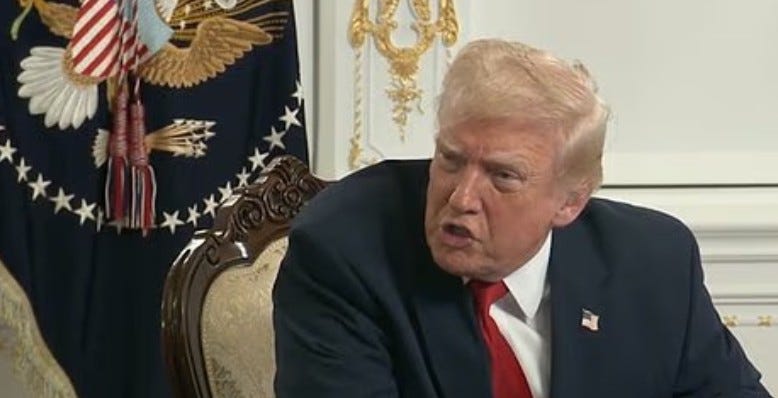
Chaos in the West Wing: Explosive Revelations from Trump’s Chief of Staff
Blockbuster profile spotlights Wiles’ omissions—no Hegseth scrutiny or recession risks—while critiquing aides, retribution, Epstein files, and Venezuela policy
Published today (December 16, 2025), the Vanity Fair series—drawing from extensive conversations with White House Chief of Staff Susie Wiles—offers an unprecedented, candid insider view into Trump’s second term, with Wiles delivering unflinching assessments of the president, his team, and key decisions.
Domestic
Wiles’ Unfiltered Portraits of Leadership and Staff In a series of remarkably candid remarks, Wiles described the president as having “an alcoholic’s personality,” despite his abstinence from alcohol, and said he operates with the belief “there’s nothing he can’t do.” She called Vice President JD Vance a “conspiracy theorist for a decade” whose shift to loyalist was driven by political expediency, and labeled Office of Management and Budget Director Russell Vought a “right-wing absolute zealot.”
Strategic Nature of Wiles’ Interviews Raises Questions Given Wiles’ reputation as a disciplined, guarded operative who rarely speaks publicly without clearance, the 11 on-the-record sessions with Vanity Fair—spanning months—are unlikely to have occurred without presidential approval. Many observers interpret the critical remarks as strategic leaks designed to distance Trump from controversial aides and policies, effectively channeling the president’s own frustrations with his administration.
Critics View Wiles’ Remarks as Trump’s Proxy Criticism Trump critics argue Wiles, known for never speaking “out of turn” and being a political survivor, would only deliver such pointed attacks—with approval. They see her criticisms of Bondi (”complete whiff” on Epstein), Vance, Vought, and ongoing retribution as reflecting Trump’s own views, potentially deliberate signals to sideline underperformers or admit uncomfortable truths ahead of legal and political battles.
President’s Comments on Tragic Murder Draw Bipartisan Backlash After initially posting yesterday that Rob Reiner’s “Trump Derangement Syndrome” likely fueled the attack that killed him and his wife, the president doubled down today in a press conference, calling Reiner a “deranged person” who was “very bad for our country.” The remarks drew criticism from both parties.
President’s Comments on Reiner Murder Draw Rare GOP Rebukes Even allies pushed back: Rep. Marjorie Taylor Greene (R-GA) called for empathy amid family drug struggles; actor James Woods (a Trump supporter) found politicizing the tragedy “infuriating and distasteful”; Rep. Stephanie Bice (R-OK) urged prayer over politics for the mourning family.
President Snaps at Reporter Over Epstein Question In a November Air Force One gaggle, Trump pointed at Bloomberg reporter Catherine Lucey and snapped “Quiet, piggy” in a sing-song tone when she pressed a follow-up on the Epstein files: “If there’s nothing incriminating, why not [release them]?” The demeaning remark—seen as sexist—drew widespread criticism and highlighted sensitivity around the impending file release.
Persistent Gun Violence Defines 2025 As December 2025 closes, the United States ends another year defined by gun violence. Some incidents involved a single victim in a parking lot, a home, or a quiet street. Others struck schools, public spaces, or workplaces, claiming dozens in minutes. Most never made national news; a few dominated headlines for weeks.
Military Video Controversy Persists Defense Secretary Pete Hegseth confirmed the unedited video of a controversial September boat strike will be shown only to select congressional committees, not the public, amid questions over rules of engagement.
Primetime Address Scheduled Amid Speculation The president will deliver a live address to the nation from the White House on Wednesday, December 17, at 9:00 p.m. ET (8:00 p.m. CT). Officially framed as highlighting accomplishments, speculation abounds that it may deflect criticism of the Venezuela strikes, immigration challenges, and reports of concessions allowing Russia to build a military base in Alaska—by blaming the Biden administration’s past policies and media coverage for necessitating the current actions.
Legal
Epstein Files Release Looms Amid Contradictions and Admissions With a December 19 DOJ deadline nearing, Wiles confirmed the president appears in the files but “not doing anything awful,” said he was “wrong” about ties involving Bill Clinton, threw Attorney General Pam Bondi under the bus by calling her early handling a “complete whiff,” and noted no client list existed as claimed. Senate Democratic Leader Chuck Schumer said Democrats have lawyers ready to challenge redactions.
Retribution Campaign Exposed as Ongoing Wiles revealed a “loose agreement” to limit retribution after 90 days has failed, acknowledging pursuits against figures like Letitia James continue and may appear vindictive—potentially bolstering legal defenses in those cases.
Second Amendment Assumptions No Longer Hold in Modern Context The Second Amendment states: “A well regulated Militia, being necessary to the security of a free State, the right of the people to keep and bear Arms, shall not be infringed.” While the Supreme Court affirms an individual right, the Founders’ assumptions—community-regulated militias, trained and accountable citizens, and a civic culture balancing tyranny prevention with public safety—have eroded in today’s fragmented society with advanced weaponry and pervasive violence.
Hegseth Faces Deepening Scrutiny Over Boat Strikes Defense Secretary Pete Hegseth is under intensifying congressional oversight, including closed-door sessions with House and Senate armed services committees focused on the Venezuela boat strike operations. Notably absent from Wiles’ extensive interviews, the controversy—separate from her comments on other military matters—continues to raise questions about rules of engagement and leadership accountability.
Economic
Sharp Downturn in Labor Market Signals Recession Risk Recession odds for 2025 have risen to ~40%. Jobs revised sharply down: -105k in October (mostly federal cuts), +64k in November. Unemployment hit 4.6% (highest since 2021), with 710k more jobless than last year and near-zero growth since April. Described as a “hiring recession” tied to AI, tariffs, and cuts; container traffic fell 7.5% YoY in October.
Administration Claims Labor Gains Amid Contradictory Data Press Secretary Karoline Leavitt stated: “President Trump is focused on putting Americans back to work. If you look at the job gains throughout this past year, what’s most remarkable about the labor market right now is that President Trump is putting American citizens back into the labor force.” This comes as unemployment reaches a four-year high of 4.6%.
Tariff Rollout and Internal Divisions Wiles revealed deep adviser splits on tariffs—some saw them as a “panacea,” others predicted “disaster.” She called announcements “so much thinking out loud,” attempted delays for unity (even enlisting JD Vance), but Trump proceeded with sweeping 10-100% reciprocal tariffs. The rollout has proven “more painful than I expected,” amid negative market reactions and polls showing public economic harm.
International
Venezuela Boat Strikes: Regime Change Admissions and Mounting Criticism Chief of Staff Susie Wiles revealed the operations aim to pressure Nicolás Maduro to relinquish power, stating the strategy is to continue “blowing boats up until Maduro cries uncle”—suggesting regime change as the core objective rather than purely anti-narcotics enforcement. From The New York Times: Strikes in international waters have killed at least 95 since September, sparking outrage from legal experts and Congress over alleged violations of the laws of war through targeting unarmed civilians. Analysts deem the actions illegal under international law and as extrajudicial killings barred by U.S. law.
Emerging U.S.-European Ukraine Peace Framework A joint U.S.-European proposal, discussed in Berlin talks, envisions bolstering Ukraine’s military, deploying European (non-NATO flagged) forces inside the country, and expanding U.S. intelligence support to deter future Russian aggression. The plan—intended as security guarantees for a cease-fire—reportedly requires Ukraine to concede territory and abandon formal NATO membership aspirations. While European leaders express optimism, Russia rejects NATO-country troops and demands full control of unconquered Donbas regions, leaving a broad truce distant.
MI6 Chief Warns of Russia’s ‘Export of Chaos’ In her first public speech on December 15, new MI6 head Blaise Metreweli described the world as in a “space between peace and war,” with Russia posing an “aggressive, expansionist, and revisionist” threat through hybrid tactics like sabotage, cyberattacks, and disinformation. She stressed that “the export of chaos is a feature, not a bug” in Moscow’s approach.
Expanded Travel Ban Announced Full bans now apply to Burkina Faso, Mali, Niger, South Sudan, Syria, Laos, and Sierra Leone, plus Palestinian Authority documents; 15 more countries face partial restrictions.
Broader Foreign Policy Tensions Internal concerns raised over erroneous deportations (including protected individuals) and deep foreign aid cuts impacting humanitarian efforts, amid escalating U.S. military operations in the Caribbean region.
The 11 interviews—conducted on-the-record throughout the year and published today in full across two parts—have sparked intense debate. While some view Wiles’ guarded nature and political savvy as evidence these remarks reflect deeper administration realities (or even strategic leaks), others see them as unguarded truths undermining cohesion. Facts matter: with unemployment at four-year highs and 2025 recession probabilities climbing toward 40% (typically ~15%), the economic trajectory appears headed in the wrong direction—perhaps a moment for fresh perspectives, like revisiting classics on leadership and economic stewardship (one might recommend “Team of Rivals” by Doris Kearns Goodwin for insights on unifying divided teams during crisis). Trump remains in command, but the revelations highlight ongoing internal frictions and questions about loyalty in his second term.
not sure how true that is