Crisis in Copenhagen: Carl Bildt Warns Denmark Faces Potential U.S. Coercion Within Months
“This Is Our Hemisphere”: From Venezuela to Greenland, Trump’s Power Play Risks Breaking NATO

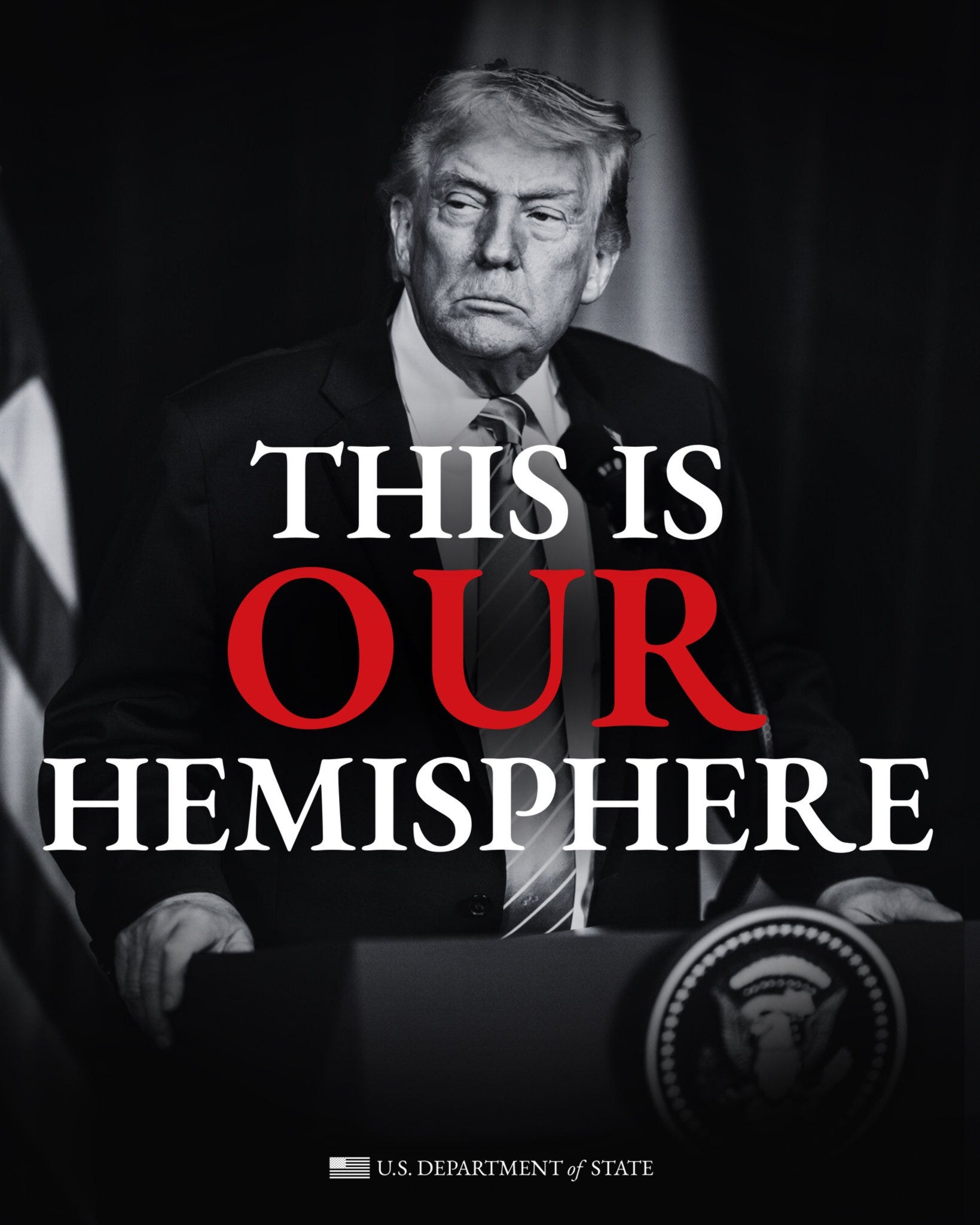
In the wake of a dramatic U.S. military raid in Venezuela that captured President Nicolás Maduro, the ripples of American assertiveness have reached the frozen shores of the Arctic. Denmark, a steadfast NATO ally, has been thrust into an unprecedented crisis as President Donald Trump and his administration openly challenge Danish sovereignty over Greenland. This escalating rhetoric prompted an urgent crisis meeting in Copenhagen, where lawmakers convened in secrecy to address the deteriorating relationship with the United States. On January 6, 2026, a powerful joint statement from European leaders—including President Emmanuel Macron of France, Chancellor Friedrich Merz of Germany, Prime Minister Giorgia Meloni of Italy, Prime Minister Donald Tusk of Poland, Prime Minister Pedro Sánchez of Spain, Prime Minister Keir Starmer of the United Kingdom, and Prime Minister Mette Frederiksen of Denmark—reaffirmed support for Denmark, declaring that “Greenland belongs to its people” and emphasizing collective Arctic security through NATO and respect for UN principles of sovereignty and territorial integrity. As the world watches Trump’s reimagined Monroe Doctrine unfold—with the State Department openly tweeting “this is our hemisphere”—questions mount about the future of transatlantic alliances, NATO’s cohesion, and the limits of U.S. power in the Western Hemisphere.
Domestic:
Trump’s Rapid Escalation to Violence: Just 11 months into his second term—inaugurated on January 20, 2025—President Donald Trump authorized a violent military raid on Venezuela that captured Nicolás Maduro. With no extradition process, no internationally recognized warrant, and no consensus among allies, the operation amounted to an international abduction. So much for the self-proclaimed “peace president.”
Trump’s Election Jokes and Rigging Claims: On the anniversary of January 6, Trump tells House GOP lawmakers at the Kennedy Center he’s “joking” about canceling the 2026 election: “I won’t say cancel the election… they should cancel the election, because the fake news will say, ‘He wants the elections canceled.’” Then—on the Jan. 6 anniversary—he pivots back to claiming the 2020 election was rigged.
Mark Kelly, Congress, and Domestic Backlash: Arizona Senator Mark Kelly (D-AZ), a member of the Senate Armed Services Committee and retired Navy captain, has emerged as a leading critic of the Venezuela raid, warning of parallels to Iraq and questioning underlying motives like oil control. In retaliation, Defense Secretary Pete Hegseth has censured Kelly and initiated proceedings to reduce his military retirement rank and pension over prior statements urging troops to resist unlawful orders—highlighting deepening domestic divisions and limited congressional oversight of the operation.
Congressional Role and Immunity Questions: The role of Congress varies sharply depending on the operation’s framing: a domestic-law-enforcement-style FBI raid with extradition might trigger narrower oversight, while an overt regime-change military action in Venezuela demands broader congressional authorization under the War Powers Resolution and potential blocking of head-of-state immunity claims for Maduro. Evident breaches include pre-operation engagements with oil companies without approval and failure to provide timely congressional notification—weakening presidential immunity defenses and giving critics like Senator Kelly strong leverage in committee reviews. With the administration insisting on the former while detractors see the latter, debates rage over constitutional bounds as the new session begins.
January 6 Anniversary and Domestic Political Firestorm: With Congress now back in session on January 6—the five-year anniversary of the Capitol insurrection—U.S. House Democrats are holding a special hearing focused on President Trump’s blanket pardons and commutations issued to nearly 1,600 individuals charged in connection with the January 6 attack. Democratic Leader Hakeem Jeffries has stated that the hearing will spotlight what he calls the GOP’s attempt “to rewrite history and whitewash the events of Jan. 6,” further polarizing an already divided Congress as it grapples with oversight of the Venezuela raid and broader executive actions.
Senate Democrats’ Accusations on Resource Reallocation: On January 6, 2026—the very first day Congress returned to session—Senate Democrats launched a sharp attack on the Trump administration, accusing it of diverting federal agents from critical investigations into child exploitation, human trafficking, and cartel activities to support ICE’s mass deportation operations. Citing an internal ICE document, they claim 33,652 non-ERO personnel were reassigned to assist Enforcement and Removal Operations (ERO) targeted actions between August 5–31, 2025. The senators immediately demanded detailed answers and documentation from the administration by January 19, 2026, signaling that oversight of domestic resource priorities will be a top priority right out of the gate.
James Carville Predicts Democratic Sweep Amid Trump Chaos: Veteran Democratic strategist James Carville, appearing on a January 2026 podcast, boldly predicted a Democratic sweep in the 2026 midterms, declaring he would be “shaken to my core” if Democrats failed to retake the House and expressing confidence they could win the Senate as well. Citing dire wrong-track numbers (72%), low presidential approval (~39%), strong Democratic performance in recent off-year elections, and a generic congressional ballot favoring Democrats by double digits in some polls, Carville dismissed lingering “Trump magic” as overstated. He argued the Venezuela intervention—framed as prioritizing foreign adventures over domestic needs like “Virginia first, not Venezuela”—combined with tariffs hammering small businesses and immigration policies disrupting labor and consumer markets, will alienate key voters, including the GOP’s nativist/isolationist wing.
International Rejection of the “Narcotics Operation” Narrative: Few governments or legal experts internationally accept the Trump administration’s framing of the Venezuela raid as a legitimate FBI-led narcotics extradition. Instead, it is widely viewed as an unauthorized military intervention and regime-change effort, triggering intense legal scrutiny in U.S. courts and abroad over violations of international law, sovereignty, and due process.
Anomalies in Official Briefing and Oversight Gaps: A striking anomaly was the absence of FBI representatives at the post-raid press conference, where Secretary of State Marco Rubio and Defense Secretary Pete Hegseth handled the briefing—fueling doubts about the operation’s true law-enforcement character and raising questions of proper interagency and congressional oversight.
Oil Industry Ties and Campaign Financing Scrutiny: Revelations show Trump informed major U.S. oil companies in advance of the Venezuela operation, with the industry subsequently pouring hundreds of millions into his 2024 campaign. Critics argue this strongly indicates private economic motives—securing Venezuelan oil reserves for corporate gain—overriding genuine national security or democratic objectives.
“This Is Our Hemisphere”: The New Monroe Doctrine and Autocratic Realignment: The State Department’s tweet declaring “this is our hemisphere” signals an official shift to hemispheric dominance, ending the post-WWII rules-based order. Stephen Miller told CNN that “no one is going to fight the US over Greenland,” but critics warn the pattern—Venezuela’s raid as a test case, Greenland for Arctic control, and long-standing “51st state” rhetoric toward Canada—completes an autocratic project. This realignment, involving apparent collaboration with Russia and China, prioritizes resources and borders while testing NATO’s resolve, eroding human rights, and risking a broader conflict where America stands on the wrong side of history.
Epstein Files Remain Buried Amid Distractions: Millions of Epstein documents remain unreleased, with the bulk of the criminal network—clients, money flows, and potential intelligence operations—still hidden. Rep. Marjorie Taylor Greene was reportedly forced out on Sunday after threatening to name Epstein clients that Trump allegedly said would “hurt my friends.” Critics contend the Venezuela spectacle served as a deliberate distraction to prevent the next scheduled document release.
International
Rodriguez’s Ascension and Venezuelan Uncertainty: Delcy Rodríguez, Venezuela’s vice president, was sworn in as interim leader with a declaration of “great honor and great pain,” pledging loyalty to Maduro, Chávez, and the Bolivarian Revolution. Despite U.S. expectations of regime change following the raid, key figures from Maduro’s inner circle remain in power, and political prisoners—estimated at nearly 1,000—have not been released, signaling continuity rather than collapse. The operation, which involved prior engagement with American oil companies to revive Venezuela’s vast reserves, suggests a prioritization of oil industry interests—potentially ahead of broader public or democratic concerns—as Trump has publicly vowed to have U.S. firms invest billions to rebuild and exploit the country’s petroleum infrastructure.
Armed Groups and Power Vacuums: Powerful paramilitary collectives, armed and funded by the Maduro regime over the years, now represent a significant wildcard in Venezuela. Often described by critics as criminal gangs tasked with the regime’s “dirty work,” these groups remain heavily influential. With Maduro removed, uncertainty grows over whether they will spark internal strife, adding to the tense atmosphere where many Venezuelans are staying indoors, awaiting clarity.
U.S. Miscalculations and Broader Ambitions: The raid’s success may have emboldened the Trump administration, but it exposed potential misjudgments: Rodríguez’s unwavering loyalty to the Chavista legacy has thwarted hopes for quick democratization. Meanwhile, Trump’s rhetoric extends threats beyond Venezuela—labeling Colombia’s leadership as run by “a sick person who does cocaine”—while invoking resource control and a revived Monroe Doctrine that encompasses oil, smuggling crackdowns, and territorial influence across the Americas. The operation’s oil-focused motives—widely rejected internationally as a cover for resource grab—risk similar backfires in threatened targets like Cuba, Greenland, and Colombia.
European Leaders’ Joint Statement on Greenland: On January 6, 2026, key European heads of state and government issued a strong joint declaration affirming that Arctic security is a critical priority for Europe and transatlantic relations. They emphasized NATO’s role, noted increased European investments to deter adversaries, and stressed that security must be achieved collectively with allies—including the United States—while upholding UN Charter principles of sovereignty, territorial integrity, and inviolability of borders. Crucially, they declared: “Greenland belongs to its people. It is for Denmark and Greenland, and them only, to decide on matters concerning Denmark and Greenland.”
The Greenland Gambit: Stephen Miller, Trump’s deputy chief of staff, has aggressively questioned Denmark’s historical and legal right to Greenland, dismissing it as a “colony” despite centuries of Danish administration and formal U.S.-Denmark agreements recognizing sovereignty. Miller downplayed resistance, claiming no one would militarily challenge the U.S. Separately, Trump’s special Greenland envoy, Louisiana Governor Jeff Landry, has floated ideas of Greenlandic independence tied to close U.S. cooperation, hinting at economic carrots alongside the stick.
Copenhagen’s Crisis Meeting: Danish members of the Folketing were urgently summoned to an extraordinary session of the Foreign Policy Committee, held in a highly secure, windowless room where even phones and coffee cups were banned. The sole agenda item: Denmark’s relationship with the United States. The government briefed opposition parties in this closed-door informational meeting, underscoring the gravity of the situation. Prime Minister Mette Frederiksen has warned that any U.S. military move on Greenland would collapse NATO entirely—marking this as Denmark’s most severe foreign policy crisis since World War II.
Carl Bildt’s Stark Warning: Former Swedish Prime Minister Carl Bildt assesses it as likely that the U.S. will employ coercive measures against Denmark within six months, describing the White House as “intoxicated by power” after Venezuela. He warns of a toolkit including financial pressure (highly effective against Denmark) and direct incentives to Greenlanders, with military options explicitly not ruled out. Bildt calls for Europe to prepare for outright confrontation with Trump over Greenland, urging unified diplomatic and political support for Copenhagen—while carefully balancing ongoing maneuvers on Ukraine.
Elliott Abrams’ Critical Assessment: Elliott Abrams, former U.S. Special Envoy for Venezuela under Trump’s first term and senior fellow at the Council on Foreign Relations, has sharply criticized the post-raid strategy, arguing that removing Maduro presented a golden opportunity for democratic transition under opposition leaders like Edmundo González and Nobel laureate María Corina Machado, who won a landslide in the contested election. Instead, he warns, the administration appears to be propping up the remnants of the Maduro regime—led de facto by indicted figures like Defense Minister Vladimir Padrino López and Interior Minister Diosdado Cabello—prioritizing oil deals over democracy, political prisoner releases, and expelling Cuban, Iranian, and Hezbollah influences. Abrams calls this a potential disaster, likening it to a return to early-20th-century “dollar diplomacy” and questioning whether the regime will genuinely reform or merely stall while assessing how little it can concede.
NATO’s Precarious Position: NATO has remained conspicuously silent, as the issue exposes deep internal rifts and requires consensus that is unlikely to materialize. Secretary-General Mark Rutte is expected to keep a low profile. Yet the crisis strikes at core principles like territorial integrity. With the U.S. signaling reduced commitment to European security—and potential openness to Russia cooperation—many allies are accelerating their own defense buildups, recognizing America’s pivotal yet increasingly unreliable role.
Looking Ahead: Accountability for the Venezuela Intervention and Looming Crises: The raid’s aftermath promises intense scrutiny: legal challenges in U.S. courts over the abduction’s legitimacy and potential immunity claims for Maduro; oversight hearings by the Senate Armed Services Committee probing authorization and execution; investigations into economic drivers, including pre-raid briefings to oil companies and hundreds of millions in industry campaign contributions to Trump’s 2024 effort, fueling accusations that private economic gains trumped national interests; broader geopolitical fallout risking escalation with Cuba, further threats to Colombia, and strained relations amid the Greenland crisis; and mounting calls for public and political accountability to prevent unchecked executive overreach in the Western Hemisphere. Compounding the chaos, government funding expires in just 24 days, risking a shutdown, while the Supreme Court is scheduled to hear Trump’s case on firing Federal Reserve officials on January 21—potentially expanding presidential economic control amid already turbulent markets.
The emergency meeting in Copenhagen, bolstered by the unified European joint statement on January 6, 2026, underscores a defiant stand against U.S. pressure—but darker questions now loom over the Venezuela operation. Mounting evidence suggests the raid was part of a grand bargain with Vladimir Putin: effectively trading U.S. disengagement or concessions in Ukraine—potentially including the long-sought revival of Nord Stream 2—for Russian tolerance of American action in Venezuela, its long-standing ally. This apparent “spheres of influence” deal revives fears of secret pacts that could extend elsewhere—perhaps concessions on Cuba in exchange for Russian influence over the Baltics, or further carve-ups of global security that undermine the post-World War II order. What began as a bid for oil control has backfired into a quagmire, with detractors charging that Trump’s “America First” slogan has devolved into “America Last,” prioritizing personal and corporate self-interest while eroding U.S. alliances and isolating the nation globally. Europe must not only rally behind Denmark to preserve Arctic sovereignty and NATO unity but also confront these transactional dangers head-on, building greater strategic autonomy to safeguard the rules-based order. Unchecked realpolitik, masked as strength, risks not just fracturing alliances but inviting a new era of great-power horse-trading at the expense of smaller nations and democratic principles. The world is watching—and the stakes have never been higher. Subscribe for ongoing coverage of this critical geopolitical shift.
Please please do not, be drawn into Trumps schemes etc! There are other ways he can receive support for the Folks and Children, of the USA …… Time he donates the cash he made ( Of his ill gotten gains etc. which led to him wanting the WhiteHouse , demolished!
Time he should pay , for the mindless destruction and corrupt government he clearly endorsed, their continuous greed and the lack, of help insight and empathy!
I’m done with it ALL