Greenland Crisis Heats Up: Starmer's Pragmatic Stand Amid Merz's Expected Critique and Davos Drama
UK PM balances alliances and sovereignty while Merz delivers firm words today, Davos grapples with US regionalization and tariffs, and Putin's Gaza "Peace Council" invitation adds a wild card

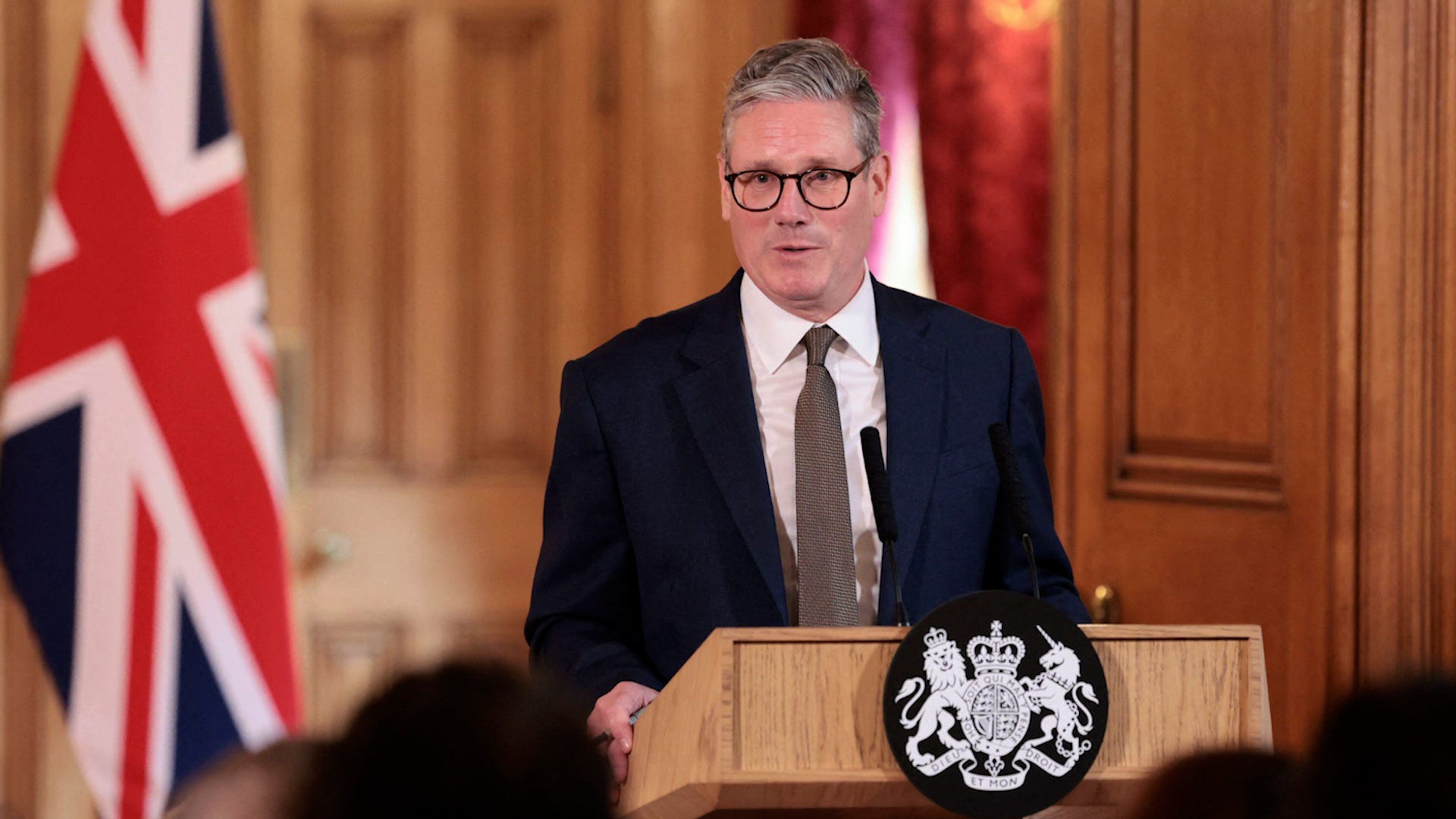
In a pivotal press conference on January 19, 2026, UK Prime Minister Keir Starmer addressed the escalating diplomatic crisis sparked by U.S. President Donald Trump’s push to acquire control of Greenland from Denmark, backed by threats of escalating tariffs (starting at 10% and rising to 25%) against allies who resist. Starmer’s remarks struck a careful balance: reaffirming the enduring “special relationship” with the United States while firmly defending sovereignty, international law, and economic stability. He stressed partnership over pressure, ongoing dialogue (including a recent call with Trump), and a pragmatic strategy to engage constructively while avoiding escalation that could harm British—and American—workers and families.
Starmer’s approach is rooted in a core belief: geopolitics is not something that happens “somewhere else.” It directly shapes fuel prices, food costs, supply chains, and the stability that small businesses and ordinary workers rely on. Rarely do those with the most power pay the price when instability grows—instead, it lands on households least able to absorb the shock. His government’s response focuses on growth, reducing energy bills, and using active government tools at home while shaping the world abroad through strong alliances and steady diplomacy.
Domestic
Protecting American Jobs and Consumers from Trade War Risks: Starmer’s firm rejection of tariffs as “completely wrong” and his warning that a trade war hurts ordinary people resonates deeply with US concerns. Many American economists and consumers fear that escalating tariffs on European imports could drive up prices for everyday goods like cars, steel, aerospace components, and more—ultimately hitting US households with higher inflation and reduced purchasing power, even as the administration frames them as leverage for national security.
Economic Stability and Investment Flows at Stake: The UK highlights billions in mutual investments and close trade ties in key sectors; from a US viewpoint, prolonged tensions could disrupt supply chains, slow growth, and jeopardize jobs in export-dependent industries. Treasury Secretary Scott Bessent’s defense of the tariffs as avoiding a “national emergency” contrasts with bipartisan critics in Congress who warn of broader economic turmoil, higher costs, and strained transatlantic relations—potentially hurting American manufacturers and workers reliant on European markets.
National Unity and Political Debate: Starmer’s call for cohesion over “performative” or “gesture politics” that harm people mirrors US domestic divisions. Some Republicans back Trump’s bold “America First” push for Greenland control as vital for Arctic security against Russia and China, while others criticize it as damaging to NATO credibility. His emphasis on pragmatic engagement without retaliation highlights the high stakes: avoiding escalation to protect shared prosperity, energy prices, food costs, and family budgets amid global shocks.
Focus on growth and protecting ordinary people: Starmer stressed active government intervention to drive economic growth, reduce energy bills, control inflation, and shield households and small businesses from global shocks—emphasizing that geopolitics directly affects fuel prices, food costs, and everyday stability, with ordinary people bearing the heaviest burden.
Commitment to international law and pragmatic diplomacy: Upholding international law is not ideological but practical, delivering stability, predictability, and fairness to protect the people Britain serves; Starmer rejects performative “gesture politics” and prioritizes sustained, results-focused dialogue over escalation.
International
Alliance Integrity Upheld: Starmer reiterated unwavering support for Denmark as a proud NATO ally that has stood shoulder-to-shoulder with the UK and US, often at real human cost. He insisted that Greenland’s future belongs solely to its people and the Kingdom of Denmark, criticizing tariffs against allies as “completely wrong” and not the way to resolve differences. Alliances endure through respect and partnership, not pressure—Starmer values the UK-US alliance deeply but insists it must be built on mutual respect, not coercion.
Engagement with Trump and Allies: Detailing sustained dialogues—including a recent call with Trump, talks with European leaders, and NATO’s secretary general—Starmer stressed constructive engagement. He welcomed Trump’s focus on ceasefires in Gaza (open to UK participation) and Ukraine, where the UK will work closely with the US and allies to apply pressure where it belongs: on Putin.
Broader Geopolitical Vision: Starmer advocated for Europe to “step up” and do more in its own defense, security, energy resilience, and cyber threats—reinforcing NATO’s role amid Arctic changes driven by climate change. He rejected any need to choose between the US and EU, viewing strong ties with both as essential. Notably, his tone was measured and pragmatic (softer than many expected, lacking “krut”/firepower in some eyes), reflecting the UK’s post-Brexit position: no longer in the EU, but a key NATO member and part of coalitions like the one supporting Ukraine. Britain positions itself as a potential bridge between the US and Europe, with everything interconnected.
Skepticism about Trump and avoiding a trade war: While valuing the UK-US alliance deeply for security, intelligence, and prosperity, Starmer questioned whether Trump is amenable to reason or the rule of law, insisting alliances must be built on mutual respect, not pressure, and that a trade war serves no one’s interests.
Europe must step up, with Britain as bridge: Starmer urged Europe to take greater responsibility for its own defense, security, energy resilience, and cyber threats; post-Brexit Britain, as a key NATO member and Ukraine coalition partner, positions itself as a pragmatic bridge between the US and EU, with all issues interconnected.
Macron Calls for EU Trade ‘Bazooka’ Against Trump Tariffs: French President Emmanuel Macron urged the European Union to activate its powerful Anti-Coercion Instrument — dubbed the trade “bazooka” and never used before — in response to Trump’s tariff threats over Greenland, framing the moves as unacceptable coercion and pushing for a strong, unified EU countermeasure if the US proceeds.
Softer tone and upcoming tests with Merz in focus: Starmer’s measured, pragmatic approach has been noticeably softer than many expected; attention now turns to German Chancellor Friedrich Merz’s speech today in Berlin, where he is expected to deliver a firm critique of US tariffs and pressure tactics on Greenland, while advocating for a coordinated European response that defends sovereignty, prepares countermeasures, and seeks pragmatic transatlantic dialogue—potentially setting the tone ahead of Thursday’s emergency EU summit.
Davos 2026: World Economic Forum Annual Meeting Underway: The ongoing WEF meeting (January 19–23) in Davos is themed “A Spirit of Dialogue,” structured around five priorities: cooperating in a contested world, unlocking new sources of growth, investing in people, deploying innovation responsibly (especially AI), and building prosperity within planetary boundaries. US-led regionalization, trade fragmentation, and tariffs under Trump’s policies are central to discussions on geopolitics, economic resilience, and renewed cooperation, with Trump’s presence and recent threats amplifying debates on the future of global trade and alliances.
Swedish Court Sentences Former Board Member in Malmö Housing Scandal: In a high-profile case in Sweden, a former board member of the housing cooperative “Femman” in the notorious “Chinese Wall” complex in Malmö has been sentenced to four years in prison for gross breach of trust against the principal, gross tax offenses, and gross accounting offenses. He was convicted despite denying the charges. Another former board member received a suspended sentence and community service for accounting offenses. The building has been under compulsory administration since March last year due to extensive neglect and mismanagement.
Gaza
Putin Invited to Join US-Led ‘Peace Council’ for Gaza: The Kremlin confirmed that Russian President Vladimir Putin has received an invitation through diplomatic channels to join a US-led “Peace Council” (also referred to as the “Board of Peace”) for Gaza. Kremlin spokesman Dmitry Peskov stated that Putin is currently studying the proposal, with Russia hoping for contacts with the American side to clarify details. The council, chaired by President Trump, aims to oversee Gaza’s reconstruction following the ceasefire, with other potential members including Sir Tony Blair. This development adds another layer to transatlantic and global diplomacy amid ongoing efforts to sustain the Gaza ceasefire and advance to phase two.
Starmer’s press conference signals mature, principle-driven diplomacy that refuses to sacrifice values or interests amid Trump’s bold maneuvers—including his recent statement that he “no longer feels an obligation to think purely of peace” (tied to a Nobel snub and linked to Greenland ambitions). By prioritizing dialogue, national unity, and growth-focused protection for ordinary people, Starmer aims to de-escalate without capitulation.
As the crisis unfolds—with an EU emergency summit set for Thursday (where German Chancellor Friedrich Merz’s stance could prove decisive in shaping Europe’s response)—the coming days will test whether this steady approach yields results or forces tougher choices. For now, Starmer’s message remains clear: alliances endure through respect, not coercion, and both the UK’s and America’s future depends on navigating these waters with resolve and pragmatism.