Iran Confirms: Ayatollah Khamenei Is Dead – An Era Ends in Bombs and Blood
After 37 years of iron-fisted rule, Iran's Supreme Leader has been killed in a joint US-Israeli strike. What comes next for the regime, the region, and the Iranian people?

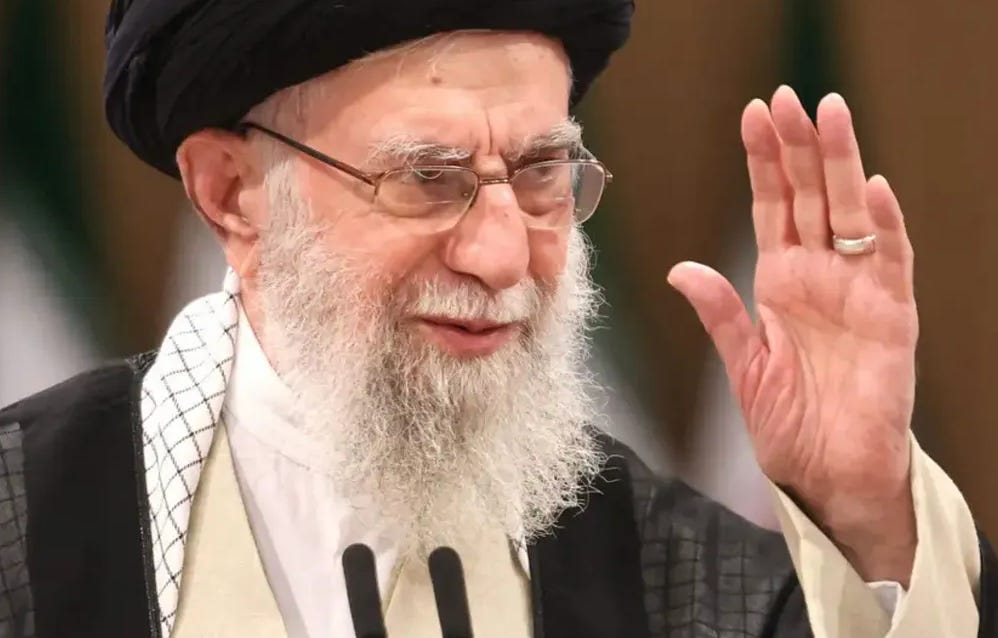
Early on March 1, 2026, Iranian state media—including IRIB, Fars News Agency, IRNA, and the Supreme National Security Council—confirmed that Ayatollah Ali Khamenei, Supreme Leader since 1989, is dead. After initial denials of U.S. and Israeli reports, Iran acknowledged his death as martyrdom. He was killed in his Tehran office during a precision strike on February 28 in massive joint U.S.-Israeli airstrikes. A 40-day national mourning period has been declared (with some reports of a seven-day holiday), but the announcement masks chaos, vows of fierce retaliation, and a deep power vacuum that could reshape the Middle East.
The world watches amid rising instability, oil market jitters, and calls for restraint.
Iran
The Strike That Ended Khamenei Early February 28, ~30 projectiles (from Israeli aircraft with US coordination) hit Khamenei’s Tehran compound, destroying it completely—satellite imagery shows burned-out structures and impact scars. High-ranking IRGC figures including General Mohammad Pakpour and Ali Shamkhani were killed, along with senior nuclear officials. This was a deliberate decapitation strike against regime leadership (codenamed “Operation Epic Fury” by CENTCOM), targeting sites in Tehran, Karaj, Shiraz, Bushehr, Bandar Abbas, Minab, and Konarak (including air bases, naval facilities, missile arrays, and air defenses). Evacuation orders were issued in Fars for Isfahan areas. Though it also caused major civilian casualties, including 108+ killed (mostly students) in a girls’ school strike in Minab (southern Iran; up from initial 85 reports) and broader toll of 201+ dead/747+ injured nationwide per Iranian Red Crescent.
Confirmation of Death – From Denial to Martyrdom After early denials (e.g., Foreign Minister Araghchi claiming Khamenei and President Pezeshkian were “safe and sound”), Iranian state media (Fars, IRIB, Supreme National Security Council) confirmed Khamenei’s death on March 1, calling it martyrdom. He was killed in his office during the attacks. Supreme Leader since 1989 (succeeding Khomeini), former president 1981–1989, aged 86. Family members including a daughter, son-in-law, grandchild, and daughter-in-law died in the same strike. Tehran residents reported emotional celebrations in streets pre-confirmation, amid confusion and unrest. UN Secretary-General Guterres could not confirm the reports.
Trump and Netanyahu’s Announcements Trump first announced on Truth Social: “Khamenei, one of the most evil people in history, is dead.” He called it the “greatest chance” for Iranians to reclaim their country and vowed uninterrupted heavy bombings for regional peace, overseeing operations from a makeshift “situation room” at Mar-a-Lago while speaking with leaders of Saudi Arabia, Qatar, UAE, UK, Kuwait, Turkey, and NATO. He hinted at “good candidates” to run Iran post-Khamenei. Netanyahu cited “all indications show this tyrant is no longer with us” and pledged strikes on thousands of regime targets until peace is secured, urging Iranians to “take to the streets” for a “once in a generation chance.”
Iran’s Immediate Retaliation Iran launched “scrap missiles” at Israel and U.S. bases in Kuwait, Qatar, UAE, Bahrain, plus additional targets in Saudi Arabia, Iraq, and Jordan—firing 137 missiles and 209 drones at UAE alone (132/195 intercepted). Damage included Dubai International Airport (4 injured, minor), Burj Al Arab and Fairmont hotels catching fire, Abu Dhabi’s Zayed Airport (1 killed, 7 wounded from debris), and a Tel Aviv residential building (1 dead, 22 injured; partial collapse and fire). IRGC promised the “most ferocious offensive operation in history” and vowed no pause until the enemy is defeated. Radio warnings declared the Strait of Hormuz “closed.” Iranian UN envoy labeled strikes a “war crime,” invoking self-defense and targeting all US bases/hostile facilities. Pentagon reports hundreds intercepted with no U.S. casualties, but escalation risk remains high.
Trump’s Assault on Iran’s Military Independence Trump vowed to destroy Iran’s missile industry, raze its navy, and annihilate its forces. He offered IRGC members immunity if they lay down arms, or “certain death” otherwise—framing the campaign as dismantling the regime’s military and proxy power. Defense Secretary Hegseth echoed this, calling it the “most lethal, complex, and precision aerial operation in history.”
Global and Economic Implications China urged immediate ceasefire; UK and Canada backed defensive efforts; U.S. Congress eyes war-powers debate. Turkey’s Erdoğan condemned strikes as sovereignty violation; France’s Macron noted no involvement or warning; UK/France/Germany condemned Iran’s retaliations but not US-Israel actions. UN Security Council emergency meeting requested by France, Bahrain, China, Russia, Colombia. IAEA emergency meeting demanded by Iran over “baseless” nuclear claims. This is Iran’s gravest crisis since 1979, with proxy spillover risks (Hezbollah, Houthis). Iran’s oil fields remain untouched, but its Strait of Hormuz closure threat has halted some shipments and spiked oil prices 5–10%. Global energy costs rise, though Gulf producers like Saudi Arabia are boosting output to limit shortages.
Domestic and Regional Reactions in Iran and Beyond
Massive Mourning Crowds in Iran Iranian state media and Reuters footage show large crowds of grieving citizens in Tehran and other cities gathering to mourn Ayatollah Khamenei as their “most beloved leader and guide,” with emotional displays of sorrow despite mixed underlying sentiments from past protest movements; millions reportedly in mourning, though scale varies by source.
Civilian Strike Casualties Highlighted Among the targets hit in the U.S.-Israeli operation, a girls’ school in southern Iran was struck, killing over 100 schoolgirls (majority students), per Iranian reports; this has fueled accusations of indiscriminate attacks and added to the nationwide civilian toll.
Protests Targeting U.S. Diplomats Hundreds of Shia Muslim demonstrators stormed the U.S. Consulate in Karachi, Pakistan, on Sunday (March 1, 2026), hours after confirmation of Ayatollah Ali Khamenei’s death in the U.S.-Israeli strikes; protesters smashed windows, vandalized property, and set portions of the building ablaze while clashing with police and paramilitary forces, who used tear gas, batons, and warning shots to disperse the crowd. At least 6–8 protesters were killed and several others injured in the confrontations, per reports from AP, AFP, and local authorities; similar attempts to storm the U.S. embassy in Baghdad’s Green Zone (Iraq) occurred, with Shia militias and crowds expressing rage over Khamenei’s killing and broader anti-U.S. sentiment.
Proxy Forces Enter the Fray Iranian-backed militias in Iraq (e.g., Saraya al-Tawhid or similar groups) claimed attacks on U.S. bases in Erbil (northern Iraq); speculation rises on Hezbollah’s potential full involvement, with its leader not ruling out participation if escalation demands it, marking broader proxy activation in the conflict.
Ongoing Military and Strategic Dynamics
Continued Strikes and Targets Attacks persisted into the second day, with fresh Israeli/U.S. waves on Iranian sites and Iranian responses targeting Israel plus U.S./allied assets in Qatar, Dubai, and Kuwait; air raid sirens sounded repeatedly in Israel, with residents in shelters amid ongoing alerts.
Violence Spiral Acknowledged as Fact Analysts describe the current situation as an active violence spiral already underway, drawing parallels to Iraq, Afghanistan, and Vietnam—once attacks begin, controlling escalation proves extremely difficult, with no clear off-ramp visible.
U.S. Justification and Domestic Debate The Trump administration frames the strikes as a response to an “immediate threat” from Iran, enabling unilateral presidential action without congressional approval; Trump reiterates calls for regime change led by the Iranian people themselves, vowing continued operations until objectives (destroying missile/navy capabilities, weakening proxies, halting nuclear program) are met.
Iran’s future must belong to the people Sweden’s Malmer Stenergård posted on X emphasizing that Iran’s future must belong to the people, describing the path ahead as long with a still-high risk of violence spiral; she stressed that Iran’s response will be decisive in shaping outcomes, amid an EU foreign ministers’ emergency meeting to discuss contributions
Global and Economic Risks
Powerlessness of UN Russia and China condemned the strikes and called for UN Security Council meetings, but remain unable to intervene effectively due to veto dynamics and lack of direct leverage; the UN appears deadlocked.
Oil Markets on Edge Threats to close or disrupt the Strait of Hormuz (under partial Iranian control) have already slowed shipping and spiked prices; market reactions and potential further oil disruptions could heavily influence global perceptions of the conflict’s costs and sustainability.
Domestic
Trump’s Entitlements Promise vs. Reality In his February 2026 State of the Union, President Trump declared he would “always protect Social Security and Medicare.” He highlighted the One Big Beautiful Bill Act’s tax relief (e.g., deductions for seniors, no tax on tips/overtime). Critics, including fact-checks from CNN, NBC, and FactCheck.org, call this misleading, as the bill reduces dedicated revenue to these programs through lower taxation of Social Security benefits.
Medicare and Social Security Insolvency Accelerated The bill’s temporary senior deduction (up to $6,000 per person, phasing out at higher incomes) cuts ~$30 billion yearly from Medicare’s Hospital Insurance trust fund by reducing taxation on Social Security benefits. CBO’s February 2026 update projects Medicare depletion in 2040 (12 years earlier than the prior 2052 estimate), triggering 8% immediate benefit cuts (rising to 10% by 2056). Social Security’s trust fund depletes by 2032 (one year sooner), limiting benefits to incoming revenue and imposing ~$18,400 annual cuts for a typical couple turning 60 today.
Winners, Losers, and Coverage Impacts CBO analysis shows top 10% earners gain ~2.7% income by 2034 from tax cuts, while the bottom 10% lose 3.1% due to reductions in Medicaid and other programs. Private Medicare Advantage plans benefit from higher spending and overpayments. Coverage losses include ~100,000 newly ineligible for Medicare, 400,000 uninsured from blocked Medicaid/Medicare Savings Program enrollment, and 5 million losing ACA subsidies (not extended in the bill), with millions more potentially skipping care due to costs.
Epstein Transparency Act Uncovers Disturbing Unverified Burial Claims
Under the Epstein Files Transparency Act (signed by President Trump on November 19, 2025), the DOJ released millions of pages from Jeffrey Epstein’s investigations. Among the disclosures are unverified tips: an August 2020 FBI report alleging a 13-year-old girl was trafficked and raped by over 176 men on Lake Michigan yachts in 1984, with Epstein allegedly involved and her uncle murdering her newborn child before dumping the body in the lake; a 2019 tip from radio host Edward Aragon about an email offering videos of abuse and claiming two foreign girls buried on Zorro Ranch as “insurance” against litigation; and a separate file (EFTA02427168.pdf) referencing a possible burial site—an email stating the dog “Zorro Duke” was buried “next to Max, on the point out toward the lodge.” All allegations remain publicly uninvestigated with no charges filed.
Ayatollah Ali Khamenei’s death closes a repressive era—but not necessarily the Islamic Republic. Strikes continue, missiles fly, and power in Tehran hangs by a thread.
Will this ignite freedom for millions of Iranians, or unleash a bloodier chapter across the region? The IRGC remains largely intact, vows ferocious retaliation, and still holds the regime’s key levers; proxy groups could escalate rapidly. Full regime collapse would demand sustained internal uprising plus unrelenting external pressure—possible, but not yet in sight. The coming days and weeks will tell.
The Middle East will never be the same.