Nordic Unity: Leaders Rally for Security and Green Competitiveness
Insights from the Nordic Council Meeting with EU President Ursula von der Leyen

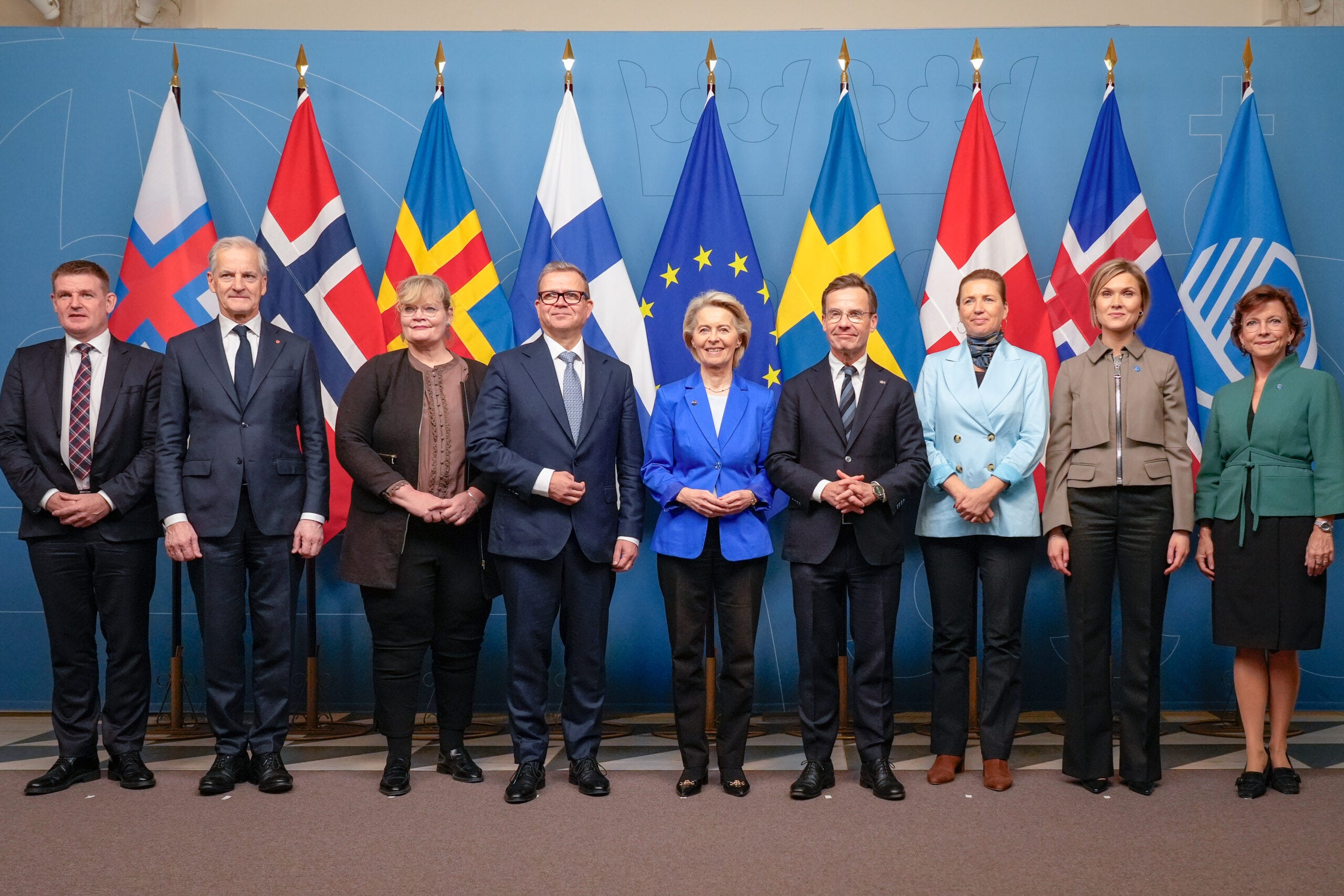
On October 28, 2025, Swedish Prime Minister Ulf Kristersson hosted a crucial summit of the Nordic Council of Ministers in Stockholm, bringing together Nordic leaders and EU Commission President Ursula von der Leyen to address pressing issues like supply preparedness, competitiveness, and security in the face of geopolitical uncertainties. The meeting, held in conjunction with the Nordic Council’s 2025 session hosted by Sweden from October 27 to 30, saw participation from Denmark’s Prime Minister Mette Frederiksen, Finland’s Prime Minister Petteri Orpo, Norway’s Prime Minister Jonas Gahr Støre, Iceland’s Prime Minister Kristrún Frostadóttir, Faroe Islands’ Lagman Aksel V. Johannesen, Åland’s Lantråd Katrin Sjögren, and Nordic Council of Ministers’ Secretary General Karen Ellemann. In a show of solidarity, the leaders adopted a declaration emphasizing the critical importance of Nordic cooperation, grounded in their shared strengths as democracies, robust economies, and common values. This gathering paved the way for the following day’s press conference, highlighting the region’s role as a model for European resilience.
EU Pledges Regulatory Overhaul: European Commission President Ursula von der Leyen urged swift action to boost EU competitiveness, calling for simplified regulations, clearer processes, and faster implementation to cut red tape, expand capital access, and lower energy costs, all aligned with recommendations from the Draghi report.
Building Self-Reliance in Essentials: Finnish Prime Minister Petteri Orpo advocated for Europe to build its own clean energy resources, fortified supply chains, and enhanced defense systems, underscoring the need for Nordic collaboration to promote sustainability, equality, economic edge, and universal education.
Deepening Integration Amid Threats: Norwegian Prime Minister Jonas Gahr Støre outlined deepening ties among Nordic and European nations, spanning defense and military sectors from industry to joint programs; he noted that Russia’s invasion of Ukraine served as an awakening call, urging smart, innovative support for Ukraine while also coordinating against organized crime and protecting youth via social media restrictions.
Balancing Security and Economic Reforms: Faroese Lagman Aksel V. Johannesen emphasized bolstering regional security with NATO at its core, pledging support for stability through allied efforts, while pushing for competitive reforms including fair trade practices, targeted deregulation, and streamlined rules to rival global powers like India and China.
Iceland’s Unique Stance on Defense and Values: Icelandic Prime Minister Kristrún Frostadóttir explained that Iceland, lacking a military, is strengthening its host nation capabilities within NATO while emphasizing the need to monitor northern threats in the Arctic; she warned that shared Nordic values like democracy are under threat and must be defended through strong cooperation with the EU and the US.
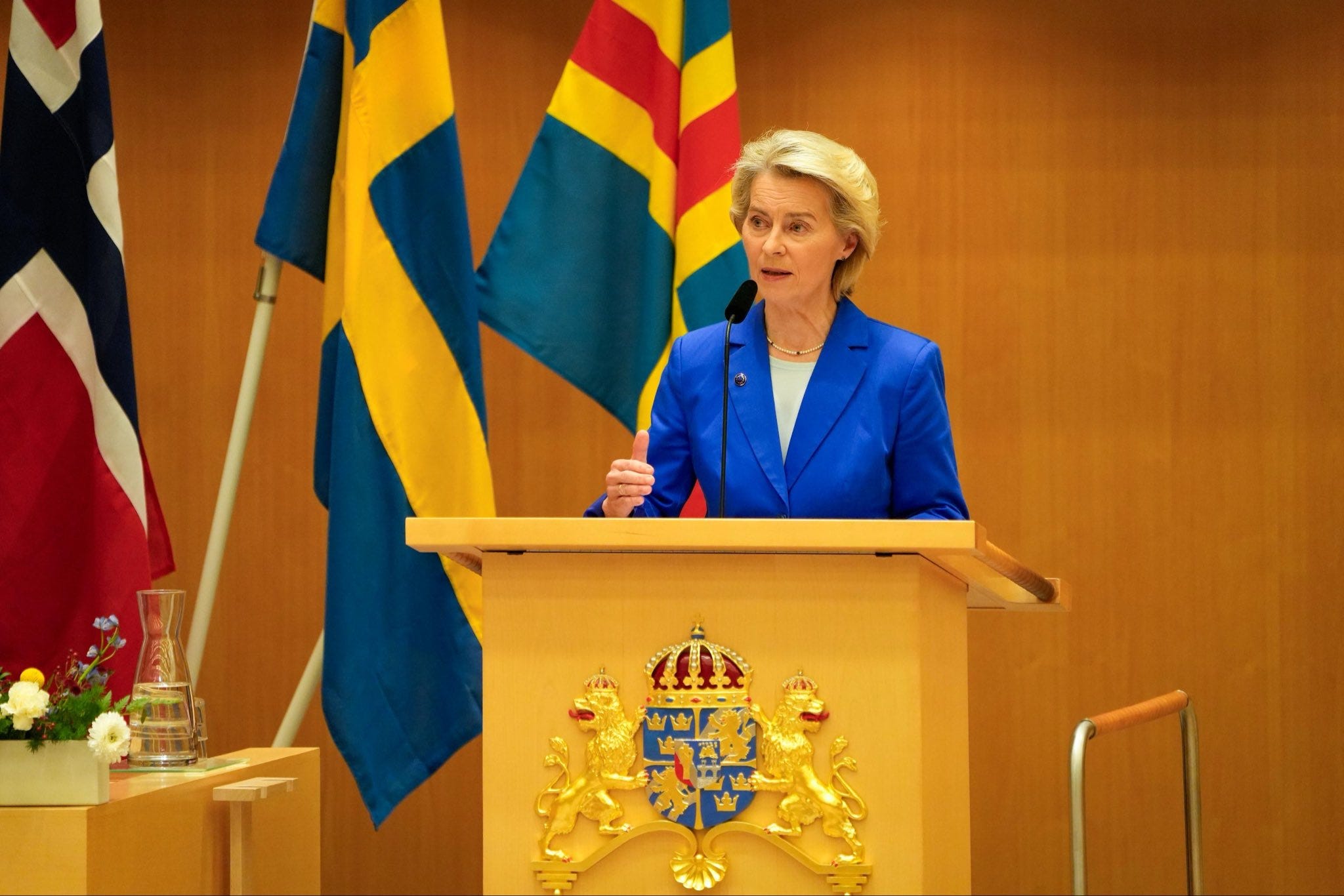
Arctic Emerges as Security Focal Point: In her address, Ursula von der Leyen highlighted the Arctic’s central role in European security, noting its rapid warming and geopolitical shifts, including Russia’s military expansions and China’s shipping routes, calling for a revised EU Arctic policy to enhance protection, sustainable use, and international cooperation amid tensions from Russia’s Ukraine invasion.
Leveraging Arctic for Competitiveness: Von der Leyen stressed the Arctic’s economic potential for Europe’s strategic independence, pointing to vast critical raw materials in Greenland and urging increased investments to boost competitiveness in the face of global changes.
Defense Sector Braces for Major Mergers: MW Group founder and CEO Mikael Karlsson forecasted a massive consolidation wave in the Nordic defense industry, fueled by Russian aggressions, European military buildup, and Sweden’s NATO entry, aiming to facilitate blockbuster deals and treat the Nordics and Baltics as one unified operational zone.
Unified Systems Key to Joint Operations: Mikael Karlsson warned that fragmented national subsystems hinder collaborative warfare, pointing to stark contrasts in drone tech between Ukraine’s battlefields and the Arctic, and advocated for multi-domain strategies fusing AI, sensors, and cybersecurity to succeed in contemporary conflicts.
Risk-Taking Through Acquisitions: Mikael Karlsson highlighted challenges for small suppliers in scaling up, such as factory investments, and promoted mergers where financially strong firms absorb risks while nurturing startup creativity, referencing MW Group’s strong profits and aggressive acquisition strategy spanning modest software outfits to billion-kronor transactions.
Investors Flock to Defense Boom: Mikael Karlsson noted growing enthusiasm from high-profile backers like Klarna’s Sebastian Siemiatkowski and Spotify founders Daniel Ek and Martin Lorentzon, as well as institutional funds entering the fray, with MW Group securing 150 million SEK in fresh capital.
Adapting Procurement and Culture: Mikael Karlsson pressed for revamping Sweden’s defense buying and security protocols to fit today’s battles, calling for quicker integration of new solutions, a cultural pivot toward results over rigid rules, and a shift to nimble, frequent purchases as budgets swell.
Political Pitfalls Loom in Security Spending: Mikael Karlsson cautioned against a potential deadlock where heightened safety erodes public support for defense funding, especially amid rapid tech turnover, urging politicians, officials, and industry to rally behind sustained commitments while addressing persistent hybrid dangers like Russian and Iranian cyberattacks and disinformation.
Investment Challenges in Sweden’s Defense Sector: Sweden’s capital markets earn praise for their dominant European position, fueled by pension systems and ISK accounts that propel savings, investments, and growth, amid EU discussions on possible broader adoption—yet European defense tech firms struggle to attract backers, with needs for direct sector contacts to secure 100 million SEK for startups, as corporate finance firms often dismiss emerging ventures lacking luxury symbols like private jets or inherited wealth, billionaire families steer clear of politics and defense due to FMV’s 18- to 36-month procurement delays, and calls emerge to connect innovators with funding to surmount these obstacles.
In a time of geopolitical tensions, this meeting underscores the Nordic region’s role as a beacon for Europe, blending unwavering support for Ukraine with forward-thinking strategies on clean tech and security. As von der Leyen aptly put it, the Nordics are Europe’s “north star”—guiding the continent toward a resilient future.