Renee Nicole Macklin Good in Minneapolis
A Mother's Death, a Blocked FBI Investigation, and Broader Turmoil

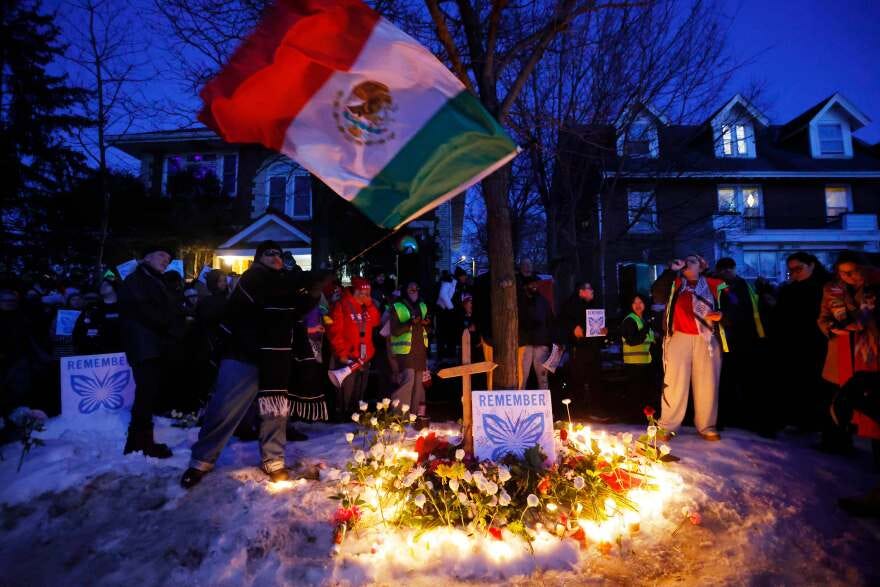
The fatal shooting of 37-year-old Renee Nicole Macklin Good—a U.S. citizen, award-winning poet, and mother of three—by an ICE agent in south Minneapolis yesterday has become a flashpoint of national outrage, amplified today by Lev Parnas in an emotional live stream where he mourned her as a hero, contrasted her death with Ashli Babbitt’s, and called for urgent, peaceful action against the administration.
Domestic
Execution in Minneapolis: Renee Nicole Good Killed by ICE
Bystander videos analyzed by outlets like The New York Times contradict federal claims that the agent fired in self-defense after Good allegedly attempted to run over officers; footage shows the agent firing at close range while alongside her vehicle as she tried to maneuver away amid a large-scale immigration enforcement operation and surge of federal agents in the Twin Cities. Many describe the incident as an execution.Administration on the Attack: Anger from Trump and JD Vance
Vice President JD Vance delivered a heated, angry press conference defending the agent, blaming Good for her own death, accusing her without evidence of ties to a “left-wing network,” and attacking media coverage—while President Trump echoed claims that the federal agent was hit by the SUV. This offensive posture suggests the administration feels under attack and is lashing out amid growing public backlash.Investigation Blocked: FBI Restricts Access and Transparency
The Minnesota Bureau of Criminal Apprehension withdrew from what was initially a joint probe after the FBI and federal authorities revoked access to evidence, interviews, and the scene—effectively blocking independent state-level scrutiny and raising grave concerns about accountability in a case involving federal force against a U.S. citizen.People Standing Up: Resistance and Calls for Action Grow
Amid the tragedy, people are standing up with protests and demands for accountability, signaling broader resistance to aggressive immigration tactics and administration policies that critics say endanger communities.Strategic Protests Planned: Targeting Weak Republican Links
Calls are mounting for strategic, peaceful protests—including a potential march on Washington—to pressure vulnerable Republican House members (researching “weak links”) on key issues like the Minneapolis incident, the economy, immigration, and Venezuela. The goal: flip just three Republicans to stand with the opposition and regain leverage over one branch of government in a narrowly divided Congress.Trump’s Desperation: Fear Over Epstein Files
Insiders and critics allege Trump is increasingly desperate and scared—not primarily over impeachment threats, but over losing control of the Epstein files, with partial releases already stirring suspicions of deeper implications.Media Consolidation and Narrative Control
Amid polarized coverage of events like the Minneapolis shooting, a longstanding concern persists: high media consolidation, with a widely cited (though dated to around 2011-2012) statistic claiming six corporations controlled roughly 90% of U.S. media—including TV, radio, newspapers, websites, and local news. While mergers, digital shifts, and spinoffs have evolved the landscape, ownership remains concentrated among major conglomerates, prompting critics to argue it limits diverse viewpoints and shapes narratives. In fast-moving stories, seeking multiple sources helps form independent perspectives.PDRNYC Update: A New Mayor’s Ambitious Start
New York City’s mayor, Zohran Mamdani, launched with eloquence in his January 1 inaugural, showcasing political talent that propelled his upset victory. Yet the address leaned heavily campaign-style toward his base, with class-infused rhetoric like taxing the “wealthiest few” for universal childcare and embracing “collectivism” over “rugged individualism.” A pivot to broad governance—appealing to departing residents, prioritizing efficient spending in a $116 billion budget—would serve better. Revoking predecessor orders (including on antisemitism and BDS) and critiquing Trump’s Venezuela actions divert from city priorities where federal help matters most. Focus and discipline are key; New York needs success after recent struggles.
International
Venezuela’s Oil Gambit
The administration has secured significant influence over Venezuela’s oil sector—the world’s largest proven reserves—directing American companies to invest billions in refurbishing degraded infrastructure. Oil proceeds are overseen by U.S. authorities, with up to 50 million barrels potentially heading stateside. By backing interim leader Delcy Rodríguez and avoiding full opposition empowerment (including sidelining Nobel laureate María Corina Machado), the U.S. pursues “leadership change” over regime upheaval, sidestepping nation-building costs. Yet vulnerabilities persist: infighting among regime holdovers, resurgent nationalism, or opposition fractures could unravel stability.Greenland on the Horizon
Venezuela is not isolated; hemispheric ambitions extend northward. Renewed U.S. push for closer ties—or outright control—of Greenland intensifies, driven by Arctic strategy, resources, and security. Secretary of State Marco Rubio is set to meet Danish officials next week amid aggressive rhetoric, including Stephen Miller’s CNN assertion that “nobody’s going to fight the United States militarily over the future of Greenland.” Traditional diplomacy remains preferable; crude threats risk alienating NATO allies and portraying America as a rogue power.A Giants Parallel
Curiously, U.S. Venezuela policy echoes the New York Giants’ ownership stance under John Mara and Steve Tisch: aversion to full “regime change.” Trump bypassed empowering Machado to avert conflict; the Giants, retaining GM Joe Schoen despite a dismal 7-27 record over two years, seek only a new head coach. Accountability lags in both, prolonging losses for Venezuelans and fans. Sometimes bolder overhaul carries less risk. Es hora de un cambio.
These are turbulent times—at home with deadly force and obstructed justice, abroad with assertive power plays. The coming weeks will test whether accountability and dialogue can prevail, or whether divisions deepen further. Stay vigilant.