Taking Down the Tree: Reflections on Endings, Traditions, and a Chaotic Year
As 2025 draws to a close, it's time to bid farewell to holiday symbols—and reflect on a presidency that keeps lowering the bar.

We put our Christmas tree up right around Thanksgiving—usually picking it out and decorating on or near November 27th—but it comes down pretty soon after the big day, once the post-holiday reality sets in. For others, traditions stretch longer: the 12 days of Christmas mean keeping decorations up until January 7th (Twelfth Night). In ancient Viking custom, the Yule celebration began around the winter solstice (December 20 or 21) and lasted 12 days or nights, ending around January 1, with the broader season closing on January 12 via a final sacrifice known as Jólablót, which typically involved the offering of a pig (often called the Yule boar) to the gods, such as Frey. Whatever your ritual, these markers remind us that endings matter—whether seasonal or political. As we dismantle lights and ornaments at the close of 2025, here’s a snapshot of domestic and international chaos marking the year’s end.
Domestic Developments
The Worst President—And He Keeps Proving It Donald Trump consistently ranks among the lowest in historian surveys of presidential greatness (often last in pre-2025 polls), with late-2025 approval ratings in the mid-30s to low 40s (Gallup 36%, RealClearPolling average ~43%). His chaotic leadership continues to reinforce expert views of his presidencies as among the least successful in modern history.
Desperate Deals in Tech and Fusion Energy On December 18, Trump Media announced a $6 billion all-stock merger with TAE Technologies, a fusion power firm targeting utility-scale plants for AI data centers—potentially making it one of the first publicly traded fusion companies, with TMTG as the holding entity. As Lev Parnas highlighted on Banner & Backbone, this reflects the family’s high-risk bets in emerging tech (mirroring deep crypto ties, including Barron Trump’s involvement). TAE’s early funding included Russian state-backed Rusnano, raising concerns over foreign influence in sensitive sectors. These moves suggest a high-stakes strategy amid economic pressures.
Epstein Scrutiny Resurfaces Hacktivist group Anonymous released materials alleging deeper connections between Trump and Jeffrey Epstein within the Miss Teen USA pageant (owned by Trump 1996-2015), including claims of Epstein’s involvement in scouting. This coincides with broader Epstein document dumps mentioning Trump multiple times, reigniting scrutiny over historical associations. Related online theories—amplified by Anonymous—claim asset giants BlackRock and Vanguard indirectly “control” the Epstein network via institutional holdings in banks, media, and political funding ties, though such allegations remain unproven and speculative.
Artists Protest Kennedy Center Renaming Following the Trump administration’s mid-December 2025 renaming of the Kennedy Center to the “Trump-Kennedy Center,” several artists canceled performances in protest, citing politicization of its nonpartisan legacy as a JFK memorial. Folk singer Kristy Lee withdrew her January 14, 2026 show, calling the change illegal and prioritizing integrity; she plans a virtual alternative titled “Showing Up: From the Kennedy Center to the Couch” on Facebook.
Blame-Shifting Tactics on Full Display Trump deploys the same deflection he uses against Epstein survivors—redirecting scrutiny to Democrats and “witch hunts”—now against Ukraine. He expressed anger over Russia’s unverified claims of a Ukrainian drone attack on Putin’s residence (which Kyiv denied as fabrication), framing the invaded nation as the aggressor. This normalizes Russian aggression, weakens allies, and demands calling out.
Echoes of Elite Secrecy in Film and Reality Stanley Kubrick’s Eyes Wide Shut features an infamous masked orgy at the lavish Long Island estate “Somerton,” rife with rituals, secrecy, and ultra-elite guests. Online parallels abound to real-world Epstein allegations involving private islands and New York mansions—highlighting hidden high-society debauchery that lingers in public discourse amid renewed document releases.
Legal Developments
Epstein Files Reveal DOJ Monitoring of Key Journalist Miami Herald reporter Julie K. Brown, whose “Perversion of Justice” series reopened the Epstein investigation, discovered her own July 2019 American Airlines flight records (including maiden name) in the latest DOJ-released Epstein documents, attached to a grand jury subpoena. Brown and Democrats on House Oversight demand answers: Why was Trump’s DOJ tracking the journalist whose work led to Epstein’s 2019 arrest?
DOJ Leaks and Politicized Probes Former CIA Director John Brennan’s lawyers accused Trump’s DOJ of forum-shopping to route a grand jury investigation (into old 2016 Russia probe claims) to Trump-friendly Judge Aileen Cannon. AG Pam Bondi publicly labeled Brennan a “bad actor,” breaching grand jury secrecy. Legal AF highlighted apparent leaks from DOJ insiders to MAGA activist Mike Davis (head of the Article 3 Project), who then attacks targets on air—part of a coordinated effort to weaponize investigations.
Abrego Garcia Case: Major Win Against Vindictive Prosecution In the Tennessee federal case against Armando Abrego Garcia (stemming from a minor 2022 traffic stop after his unconstitutional deportation), Judge Waverly D. Crenshaw Jr. canceled the January 27, 2026 trial date. Abrego Garcia established a prima facie case of vindictive prosecution; the burden now shifts to DOJ to rebut it at a January 28 hearing. If DOJ fails, the case could be dismissed. Legal analysts like Glenn Kirschner and Legal AF hail it as a symbolic victory of rule of law over Trump’s weaponized DOJ.
International Developments
Zelenskyy’s Mar-a-Lago Meeting: Strategic Necessity or Risk?
The December 28 meeting at Mar-a-Lago between Zelenskyy and Trump (attended by Jared Kushner and Steve Witkoff) was framed by Trump as a breakthrough, with claims the sides are “closer than ever” and a draft plan ~90-95% agreed. However, this assessment appears exaggerated and detached from reality: no major concessions emerged, thorny territorial issues (especially Donbas) remain unresolved, and Zelenskyy had cited similar “90%” figures before the meeting, indicating little actual movement.Trump’s Claim on Russia’s Intentions Raises Eyebrows Trump, fresh from calls with Putin, stated Russia “wants to see Ukraine succeed” and pledged cheap energy/reconstruction aid—prompting visible skepticism from Zelenskyy (smirks, raised eyebrows). This overly optimistic view of Putin’s intentions clashes with U.S. intelligence assessments of ongoing Russian aggression and maximalist goals. It questions whether Trump is relying on personal diplomacy over briefings, while Zelenskyy’s transparency highlights Putin’s intransigence amid continued attacks. Europe and allies like Canada may deepen ties as U.S. focus shifts toward resource extraction and transactional deals.
Ukraine-Russia Conflict and “Lithium Politics” Stalled peace talks center on Donbas control, with U.S. pressure tied to accessing high-quality lithium and rare earths vital for EVs and data centers. Proposals for a Demilitarized Special Economic Zone underscore resource priorities over lasting peace; Ukraine refuses concessions amid high costs of Russian advance. Zaporizhzhia Nuclear Plant remains contested, with suggestions of neutral zones and alleged U.S.-Russian deals.
China’s Export Controls and U.S. Vulnerabilities Late-2025 restrictions on steel, lithium batteries, graphite, and other materials deepen U.S. supply chain strains for tech/infrastructure. Combined with ongoing bans on antimony/gallium/germanium, these choke essential inputs, highlighting dependency and mismatch between AI investment hype and physical resource reality.
Escalating Conflicts in Middle East and Africa Israel continues frequent strikes violating Lebanon/Syria ceasefires, pursuing maximalist goals. U.S. airstrikes in Nigeria (framed as anti-ISIS/Christian protection) target mineral-rich zones amid Russian gains. In DRC, M23’s performative Uvira withdrawal preserves gold/logistics dominance despite U.S. pressure on Rwanda—maintaining leverage over copper routes.
Thailand-Cambodia Border Clash and Semiconductor Fallout A fragile ceasefire follows clashes disrupting key trade corridors and semiconductor logistics, forcing NVIDIA production cuts (30-40%) and price hikes (10-25%). Trump falsely claims credit; internal Thai shifts suggest autocratic consolidation using nationalism.
Pentagon’s December 23 Report Warns of Growing Chinese Military Threat
The Pentagon’s annual report on China’s military power, released on December 23, 2025, states that China expects the PLA to be capable of fighting and winning a war over Taiwan by the end of 2027, as part of broader modernization goals tied to achieving “strategic decisive victory” in a potential conflict. Longer-term ambitions aim for China to become the world’s dominant power by 2049. With the world’s largest shipbuilding capacity and rapid advancements in nuclear, cyber, space, and hypersonic capabilities, China can increasingly challenge the US regionally—and potentially globally—making the American homeland more vulnerable. As Swedish defense analyst Joakim Paasikivi commented on the implications: “It can safely be stated that this is not solely an American concern.” Aggressive U.S. actions in resource hotspots like Venezuela are viewed by some as providing China rhetorical cover for potential coercive tactics, such as a blockade, around Taiwan.Death of Khaleda Zia, Bangladesh’s First Female Prime Minister On December 29, 2025, Khaleda Zia—Bangladesh’s pioneering female prime minister and longtime rival to Sheikh Hasina—died at age 80 in a Dhaka hospital. Leader of the Bangladesh Nationalist Party for decades, she served three terms (1991-1996, 2001-2006, and briefly in 1996), alternating power with Hasina in a dynastic rivalry that defined the nation’s politics. Jailed or under house arrest for much of her final years on corruption charges widely seen as politically motivated, Zia was freed after Hasina’s 2024 ouster. Her death marks the end of an era in Bangladesh’s turbulent democratic history.
Gaza Developments
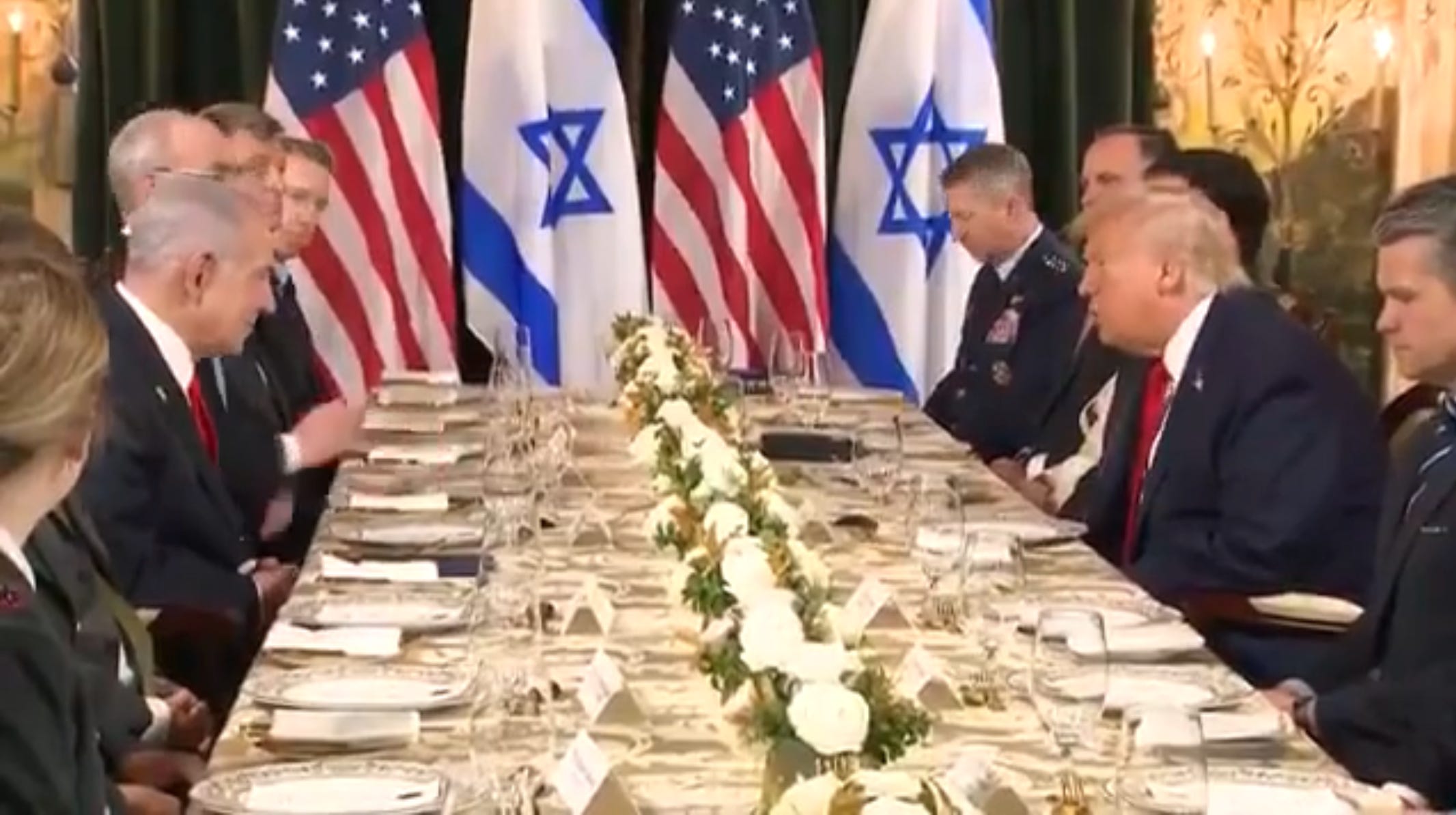
Trump-Netanyahu Rapport and Honors During Netanyahu’s December 29 Mar-a-Lago visit, Trump was caught on a hot mic complaining about not winning the Nobel (”Do I get credit for it? No. I did 8 of them”). Netanyahu responded by announcing Israel would award Trump its prestigious Israel Prize for “tremendous contributions to Israel and the Jewish people”—highlighting the personal bond driving U.S.-Israel alignment.
Shadow Diplomacy and Key Players As Lev Parnas detailed on Banner & Backbone, Gaza talks rely on upgraded “shadow diplomacy” prioritizing personal gains over U.S. interests—evolving from first-term dirt-digging to resource/power consolidation. Jared Kushner (no formal role) remains central, leveraging Abraham Accords experience and Gulf-funded Affinity Partners. Steve Witkoff, official envoy, bridges Putin/Netanyahu via Russian proxy Kirill Dmitriev. Ivanka Trump is seen by insiders as the sharper decision-maker. This network extends to oligarchs (Dmitriev, Blavatnik), eyeing postwar opportunities in Gaza and beyond.
Phase 2 Ceasefire Plan: Core Elements The Mar-a-Lago summit aimed to advance the U.S.-brokered 20-point plan (October 2025, UN-approved) into its complex second phase ending Hamas rule: full (possibly staged) disarmament starting with heavy weapons (monitors/buy-backs), Israeli withdrawal from remaining areas, interim Palestinian technocratic governance, and reconstruction under a Trump-chaired “Board of Peace” with an International Stabilization Force. Iranian threats and Hezbollah were also discussed.
Gaza’s Phase 2 Impasse: Security vs. Statehood Witkoff and Kushner push quicker, flexible progress to sustain the truce. Rubio and Hegseth back Israel’s demand for full disarmament before withdrawals/hostage returns, prioritizing security. Netanyahu opposes rapid demilitarization, citing risks and rejecting statehood as a “reward for terrorism.” Palestinian leaders and much of the international community insist lasting peace requires credible steps toward statehood, self-determination, and civilian rights—warning indefinite occupation without a political horizon breeds instability. Both sides agree defeated Hamas offers no future, and mutual tolerance—requiring Palestinian rejection of violence and acceptance of Israel—is essential for sustainable outcomes over endless conflict.
What a year it has been—chaotic, unpredictable, and often disheartening. Trump’s foreign policy dominated headlines with bold moves and transactional flair, yet it was undermined by a deeper absence: no coherent strategy, no enduring guiding principles. Allies and adversaries alike were left guessing, often resorting to lavish “gifts” and flattery because nothing else reliably swayed decisions. This capriciousness kept enemies off-balance but eroded trust with partners who crave predictability and shared vision.
Amid fragile ceasefires and lowered expectations, some emerged stronger: Netanyahu achieved near-maximalist goals in Gaza while weakening Iran’s proxies; MBS and Qatar solidified regional influence. Brighter notes included the election of Pope Leo XIV—the first American pontiff, with Creole roots in New Orleans—whose early messages emphasized treating all people with dignity amid global divisions, even if there is no free immigration. Whimsical highlights came from Portland’s “Frog Brigade” protesters, whose inflatable frog costumes became a viral symbol of peaceful, creative resistance against overreach, reclaiming joy in activism.
Yet the biggest losers stand out: Pete Hegseth, whose controversies epitomize cabinet turmoil; JD Vance and Project 2025 architects, whose authoritarian blueprint for dismantling civil-service protections, gutting oversight agencies, and centralizing power advanced in parts despite fierce resistance; and Russia, suffering roughly 350,000 casualties for a mere 0.77% territorial gain in Ukraine—a pyrrhic “victory” exposing Putin’s strategic failure.
Most sobering of all was the quiet failure of oversight. Congress, regulators, and ethics mechanisms held clear authority in 2025—yet chose, time and again, not to exercise it. No dramatic collapse, no loud scandal—just institutional paralysis, incentives misaligned, and accountability that existed on paper but rarely moved in practice. This wasn’t about one person; it was about systems designed to check power simply... not activating.
As we turn to 2026, desperation breeds mistakes, but persistence in accountability can breed progress. Looking ahead to the midterms and beyond, don’t count out figures like Illinois Governor J.B. Pritzker—a self-made billionaire and proven executive who embodies the successful businessman persona Trump often claims, yet with a track record of pragmatic governance and broad appeal that could challenge the current narrative—or California Governor Gavin Newsom, a seasoned political operator who knows how to play this game with sharp messaging and national ambition. May the new year bring clarity, principle-guided leadership, renewed institutional courage, and real advances toward peace and justice. Happy New Year—let’s rebuild stronger.
The observation about institutional paralysis really captures something we tend to overlook amid all the headline-grabbing drama. It's not that oversight systems collapsed or got destroyed, they just sort of...didnt activate. I saw this firsthand in local governance, where the structures for accountability were all technically there but incentives were misaligned enough that nobody pressed the button. The quiet failure feels more dangerous than dramatic breakdowns tbh, because there's no clear moment to point at and say "this is where it went wrong." Instead theres this slow erosion where norms just stop getting enforced. The question for 2026 becomes whether institutional inertia can reverse itself, or if requires external pressure from voters and civil society to jumpstart those mechanisms again.
Wow Cash Flow! Great total breakdown of ALL CURRENT News