The Decapitation That Backfired: Trump’s Iran War Is Already Slipping Into Stalemate
Khamenei is dead, but Iran’s drones keep coming, oil is spiking, and casualties are mounting. This isn’t a 4-week victory—it’s the forever war Trump once swore to avoid.

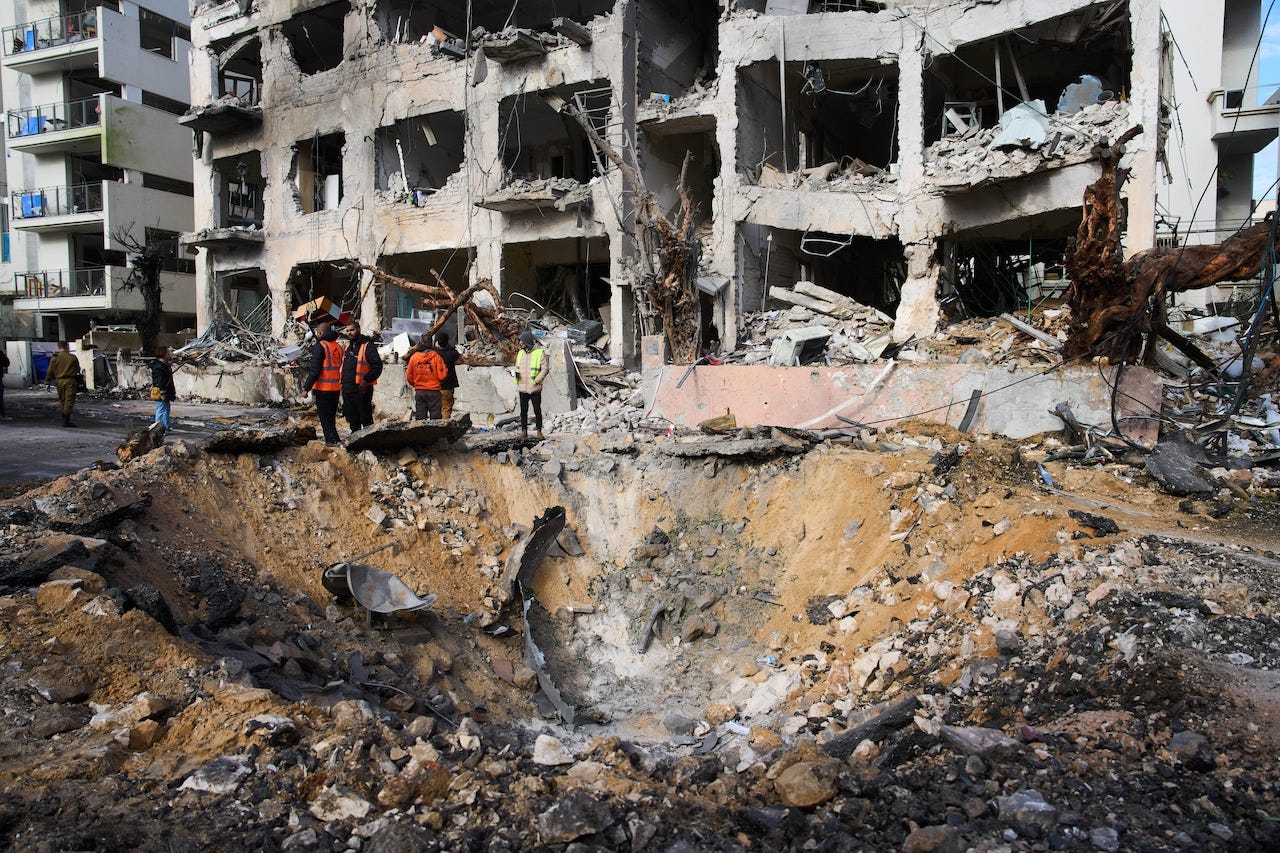
Operation Epic Fury began with a decapitating strike: Supreme Leader Ayatollah Ali Khamenei killed in his own office (despite Iranian officials urging him to relocate for safety) along with roughly 40 other senior figures, including the head of the Revolutionary Guard and the defense minister. President Trump hailed it as an overwhelming success—hundreds of targets destroyed, nine ships sunk, military command shattered—using B-2 stealth bombers dropping 2,000-pound bombs on ballistic missile sites and 100 Israeli jets striking Tehran simultaneously. Yet within 48 hours Iran has already killed three US service members in Kuwait, struck synagogues and airports across the region, and sent oil prices soaring. Iranian officials report more than 200 dead and over 740 injured since the campaign began. This is not 2003 Iraq. It is something far uglier—and potentially far longer. The core uncertainty: does Trump still hold the course, or is the conflict slipping into Iran’s preferred attritional stalemate?
International
Overwhelming force claimed, but commitment remains open-ended Trump described Operation Epic Fury as “one of the largest, most complex, most overwhelming military offenses the world has ever seen,” claiming hundreds of targets hit—including Revolutionary Guard facilities, air defenses, nine ships and a naval building—in minutes. He vowed that combat operations will continue “in full force” until his “very strong objectives” are met, while warning there will “likely be more” U.S. deaths before the conflict ends.
Explicit calls for regime change and internal uprising Trump directly urged the Revolutionary Guard, military, and police to “lay down your arms and receive full immunity” or face “certain death,” and called on “Iranian patriots who yearn for freedom” to “seize this moment,” “be brave, be bold, be heroic,” and “take back your country,” insisting that America is “with you” and that he has fulfilled his promise to support them against the regime.
Trump’s stated timeline vs. emerging doubts on who controls the course Trump framed the campaign as planned for roughly “four weeks or so” with overwhelming early success and operations continuing “in full force” until objectives are met. But with retaliatory strikes ongoing, casualties mounting, and no rapid collapse in Tehran, the question looms: does Washington still hold the course and dictate the endgame, or has Iran already shifted momentum toward a prolonged, grinding war?
Netanyahu and Israel push for maximum pressure Israeli Prime Minister Benjamin Netanyahu has vowed to expand strikes dramatically, stating Israel will hit “thousands of targets of the terrorist regime” in the coming days to create conditions for Iranians to “free themselves from the chains of tyranny.” Netanyahu has long advocated for a decisive war against Iran, and analysts see Trump’s actions as realizing Netanyahu’s decades-old dream of a major conflict to dismantle the regime—despite no clear plan for what follows and no ground forces to install a new government.
Geography and scale create nightmare conditions for any sustained campaign Iran is nearly four times larger than Iraq, spanning vast deserts, rugged mountains, and a population of nearly 90 million people dispersed across difficult terrain. This combination makes any ground follow-through after airstrikes extraordinarily logistically challenging and highly vulnerable to prolonged guerrilla resistance and insurgency far worse than post-Saddam Iraq.
Drones and missiles enable indefinite, low-cost attrition warfare Iran’s Shahed-series drones and ballistic missiles are inexpensive and mass-producible at rates potentially reaching hundreds per day, allowing sustained barrages that closely mirror Russia’s long-running drone campaign against Ukraine. Retaliatory strikes have already targeted civilian and economic sites across the region and show every sign of continuing to overwhelm air defenses over time.
Asymmetric costs heavily favor the defender (Iran) Iran can launch hundreds of low-cost drones and missiles, forcing the US and allies to expend vastly more expensive interceptors and defensive resources. Strikes on Gulf infrastructure and vessels in the Strait of Hormuz further threaten critical global energy supply lines and international trade routes.
Civilian and economic damage spreads rapidly across the region Repeated Iranian retaliatory strikes have hit major airports in Dubai, Abu Dhabi, and Sharjah; ports and high-rises in Bahrain; US bases in Kuwait; commercial shipping in the Strait of Hormuz; and civilian targets including hotels and the Burj al-Arab. This has triggered civilian evacuations (including for UK citizens), caused sharp surges in global oil prices (up over 10% to $80+), and created serious risks to international travel and energy security.
School strike in Minab exposes severe civilian risks near military targets An airstrike hit the Shajareh Tayyebeh girls’ elementary school in Minab, Hormozgan Province—located adjacent to an IRGC naval base (16th Assef Coastal Missile Group)—killing at least 165 people, most of them girls aged 7–12, according to Iranian state media (IRNA), with 96 others injured. Israeli President Isaac Herzog told CNN he was trying to verify the reports and noted that jihadist groups often base missile infrastructure in civilian areas.
IRGC poised to dominate succession and maintain regime continuity Following Khamenei’s death, an interim hardline council has formed with Brigadier General Ahmad Vahidi—former Quds Force commander (1988–1998), Defense Minister under Ahmadinejad (2009–2013), and a veteran hardliner sanctioned internationally for alleged terrorism links and protest repression—appointed as the new IRGC commander-in-chief. The deliberately opaque structure (interim council plus loyal hardliner) is a core regime strategy to keep real power centers unclear, while pre-arranged succession mechanisms and the Guard’s deep bench of mid-level leaders ensure no genuine fracture or collapse appears possible.
Popular uprising remains highly improbable; external figures are toxic Memories of the Shah-era SAVAK secret police continue to poison any appeal Reza Pahlavi might have among ordinary Iranians. Regime demonstrations of overwhelming force have deterred revolt, streets in Tehran remain largely deserted with Basij checkpoints everywhere, and there is no visible broad internal momentum for change despite Trump’s repeated public calls for Iranians to rise up and reclaim their country.
Allied backing remains strictly limited and defensive The UK under Prime Minister Keir Starmer has approved US use of Diego Garcia and RAF Fairford for “specific and limited” defensive strikes targeting Iranian missile sites and launchers, while explicitly ruling out any participation in offensive action and repeatedly citing the lessons learned from the Iraq invasion. Britain, France, and Germany have jointly signaled readiness to enable defensive action to destroy Iran’s missile and drone capabilities at source.
Ukraine-style stalemate looms: is Trump prepared for a years-long war? Like Russia’s grinding campaign in Ukraine—where tens of thousands of cheap drones have sustained fighting for years—Iran can produce hundreds of Shahed drones and missiles monthly, absorb enormous punishment, and has explicitly prepared for an “existential war.” US munitions stockpiles (precision-guided bombs, interceptors, and JDAMs) have already been heavily depleted by support for Ukraine and Red Sea operations. With Trump vowing “full force” operations indefinitely and analysts warning Iran can sustain 3–4 weeks or longer before any off-ramp, the question is whether Washington has the stockpiles, political will, and domestic support for a multi-year attritional conflict.
Domestic
Trump’s rhetoric clashes with the reality of a major new war The strikes lack a clear, defined endgame beyond destroying missiles, the navy, proxy networks, and nuclear-related facilities. New Iranian leadership has reportedly reached out about talks “in due course,” Gulf partners are pressing for de-escalation after being hit, and the first three US deaths in Kuwait—plus warnings of more casualties—have already generated noticeable unease. Trump has now signaled willingness to talk to the new Iranian leadership.
MAGA base alarm grows over apparent “America First” betrayal Core Trump supporters voted for an end to “forever wars” and regime-change disasters abroad. The deaths of three US service members, the promise of further casualties, and rising gas prices from disrupted oil flows are already fueling significant online criticism and grumbling within the base—with midterm elections just nine months away.
Congress presses hard for details on authorization Congressional leaders from both parties have expressed bipartisan anger over the lack of prior approval for such expansive military operations. The first formal briefings are scheduled for Tuesday, featuring Secretary of State Marco Rubio, Defense Secretary Pete Hegseth, and CIA Director John Ratcliffe.
Prediction-market winners raise fresh profiteering suspicions Several large, anonymous accounts on the U.S.-based prediction market Polymarket reportedly made more than $1.5 million by correctly betting on the exact timing of this weekend’s U.S. strikes on Iran. At least seven accounts hit the jackpot on “U.S. strikes Iran” markets; five were brand-new wallets with no prior activity, a sixth had only bet on strikes the previous weekend, and one (“Magamyman”) has spent the past year heavily wagering on U.S. and Israeli attacks on Iran.
Inner-circle tensions surface over the war decision According to The Daily Beast, Vice President JD Vance—long skeptical of foreign wars—has been sidelined by Trump during the Iran strikes. While Hegseth and the national security team joined Trump at Mar-a-Lago, Rubio briefed lawmakers, and Leavitt handled communications, Vance was relegated to the Situation Room with Treasury Secretary Scott Bessent, DNI Tulsi Gabbard (also on record against strikes on Iran), and Energy Secretary Chris Wright, receiving updates via secure line.
Iran’s nuclear breakout risk (stockpiles enriched to 60% purity) and extensive proxy network offer a narrow diplomatic path—if Tehran is willing to halt excessive enrichment, dismantle proxy warfare, and accept verifiable limits. That remains a massive “if.”
Without an exit strategy that directly neutralizes those core threats, this war will not end in weeks. It will grind on—drones raining, oil spiking, body bags returning—until it becomes the very quagmire Trump once vowed to avoid. The only question left: does Washington still control the timeline, or has Iran already turned the page to attritional stalemate?