Trump's High-Stakes Iran Showdown: From Overconfidence to Full-Blown Crisis?
How U.S. Strikes Could Ignite Middle East Quagmires, Asian Wars, and Domestic Power Shifts

With U.S. warships closing in on the Persian Gulf and Geneva talks in ruins, President Trump’s ultimatum to Iran—complete dismantlement of nuclear, missile, and proxy capabilities or face devastating strikes—risks spiraling into the very war he claims to avoid. The White House radiates confidence that a precise, limited operation will force Tehran to capitulate without wider fallout. Yet the evidence points the other way. Iran’s battered regime is cornered, not broken, and its leaders increasingly view every concession as a step toward existential defeat. Trump’s track record of bold moves yielding quick wins—without apparent blowback—fuels the belief that he can repeat the formula. This time the conditions are fundamentally different. From Stockholm’s exposed sanctions loopholes to Islamabad’s “open war” declaration against the Taliban, the ripples of America’s assertive foreign policy are spreading fast and unpredictably.
International
Trump’s past successes have bred dangerous overconfidence. The pattern is familiar: establishment experts warn of catastrophe, Trump ignores them, and nothing catastrophic materializes. The 2018 Jerusalem embassy move triggered predictions of mass violence—yet protests remained contained. Joining Israel’s June 2025 strikes on Iran’s nuclear facilities was expected to ignite all-out war and accelerate Tehran’s breakout—yet Iran absorbed the blows and stood down. The January 2026 removal of Venezuela’s Maduro was forecast to plunge the region into chaos—yet relative stability held. These episodes have convinced the president that decisive action delivers swift results with minimal repercussions, leading him to dismiss today’s expert cautions about Iran as overwrought.
Iran’s weakness today fuels aggression, not capitulation. Tehran’s current fragility—proxies devastated, nuclear sites ruined, air defenses shattered—does not create space for compromise; it shrinks it. The regime sees its ballistic missile arsenal as the final credible pillar of self-defense. Israel’s repeated strikes on that arsenal (approved by Trump in December 2025) convince Iranian leaders that Washington and Jerusalem intend a perpetual campaign that could eventually threaten regime survival. Unlike the June 2025 exchange, where limited nuclear-focused hits allowed de-escalation, the regime now anticipates endless attacks on its core deterrent. That perception demands a fiercer posture to deter future assaults.
Trump’s blurred objectives create a volatile trap. The president’s drive for a “grand deal” or overwhelming force stems from his desire to be remembered as a historic peacemaker. But his motives are a mix: demonstrating U.S. military dominance, strengthening his negotiating hand, fulfilling January Truth Social promises to protect Iranian protesters, and distinguishing himself from Obama. This lack of a single, clear priority—unlike his more focused prior operations—leaves him vulnerable if strikes do not produce the expected rapid surrender. The binary framing (total capitulation or war) and ambiguous endgame signal to Tehran that any attack may target regime change, not just coercion.
A strike risks grinding, asymmetric retaliation. Iran cannot prevail in a conventional war against the United States or Israel and would prefer quick de-escalation, as it has in the past. But the landscape has shifted: proxies are neutralized, nuclear infrastructure destroyed, defenses weakened—yet ballistic missiles remain a potent, survivable capability. They can strike U.S. bases, Gulf oil infrastructure, or choke the Strait of Hormuz. Past responses (Soleimani reprisals, post-2025 nuclear salvos) were proportional but costly. If Tehran perceives an existential threat to its missile force, it may choose broader, more punishing retaliation to impose unacceptable costs and prevent future strikes. While some White House voices argue Iran’s depleted resources limit its options, historical behavior suggests otherwise. A “limited” operation could easily become a multi-front quagmire.
Quiet pressure offered a safer path—Trump chose flash. Iran threatens U.S. interests in the Middle East but poses no immediate danger to the American homeland. Sustained sanctions, diplomacy, and support for internal dissent after the regime’s brutal crackdown could have continued eroding its position without open conflict. Instead, the president has demanded sweeping, humiliating concessions—zero enrichment, missile program dismantlement, proxy abandonment—or force. Iranian leaders view missile concessions as existential defeat, dramatically raising the likelihood that escalation will be chosen over negotiation.
Merz’s blunt Beijing visit shows Europe hedging against U.S. disruption. As American tariffs create global uncertainty, German Chancellor Friedrich Merz arrived in China in February 2026 with both an outstretched hand and pointed demands: cut subsidies to domestic manufacturers, allow the renminbi to appreciate, and guarantee critical mineral exports. He framed deeper German-Chinese economic ties as a stabilizing counterweight to worldwide trade volatility. On Ukraine, Merz pressed Xi to use Beijing’s leverage over Moscow for peace; Xi reiterated familiar calls for “dialogue and negotiation” without assigning blame to Russia. The visit secured a commitment for up to 120 Airbus orders and left Merz “very optimistic.” It illustrates how Trump’s policies are quietly pushing key allies toward pragmatic re-engagement with Beijing.
Cuba’s deadly speedboat clash exposes regime-change perils in America’s backyard. A stolen Florida-registered speedboat entered Cuban waters, triggering a gunfight that killed four (including at least one U.S. citizen) and wounded six. Havana called it a “terrorist infiltration” by armed exiles; questions persist about orchestration, intelligence traps, or freelance militancy—one named participant surfaced alive in Miami. The incident occurs against Trump’s fuel blockade and regime-change rhetoric, echoing Maduro’s ouster but carrying higher risks: power vacuum, mass migration, humanitarian crisis. Experts warn that toppling the regime without a clear transition plan could destabilize the region far more than the White House anticipates.
Swedish bank scandal exposes sanctions-evasion vulnerabilities in Europe.
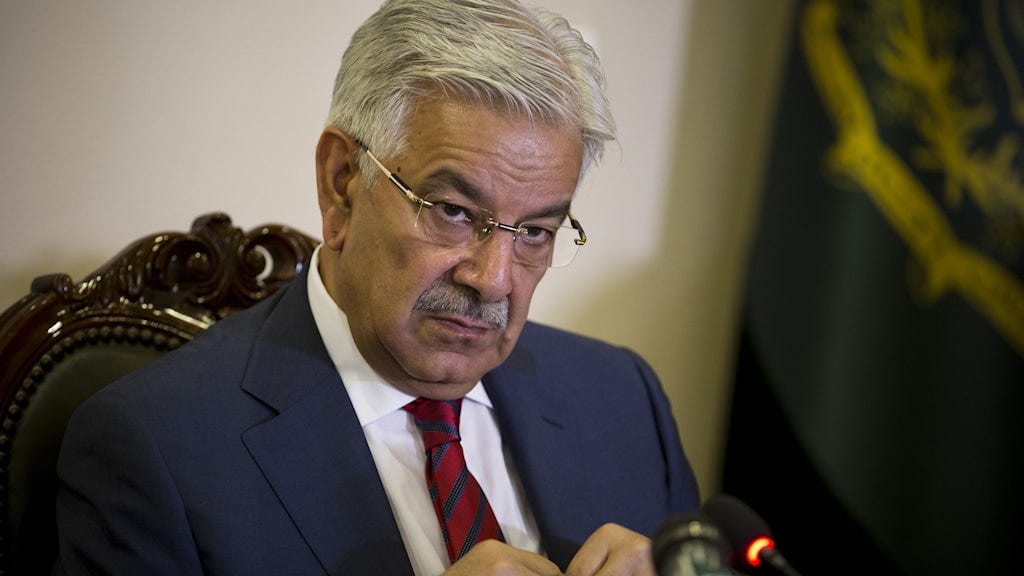
A recently convicted SEB employee—sentenced to four years for embezzling nearly 30 million kronor from client accounts—handled a suspicious transfer linked to Gazprom executive Olga Pavlova. Despite Russia sanctions, more than 60 million kronor moved from abroad to a relative’s SEB account in Sweden. Emails reveal discussions about bypassing potential Swiss blocks and creating evasion routes. Although the banker faced no charges in the Russia matter (investigation dropped), SEB flagged and froze the transfers. The case highlights persistent gaps in European banking controls that allow sanctioned funds to flow even as the continent tightens enforcement—potentially weakening sustained pressure on Moscow.Pakistan-Afghanistan border erupts into open war. Pakistan’s Defense Minister Khawaja Asif declared “open war” against Afghanistan’s Taliban government after escalating cross-border violence. Afghan forces attacked Pakistani border posts, killing soldiers; Pakistan responded with airstrikes on Taliban targets in Kabul, Kandahar, and elsewhere. Islamabad accuses Kabul of harboring militants who launch attacks inside Pakistan—a grievance dating to the Taliban’s 2021 return. The minister said patience had “overflowed.” The flare-up threatens to draw in regional powers, destabilize South Asia, and complicate U.S. counterterrorism and Afghanistan policy under Trump.
Swedish forces jam suspected Russian drone near French carrier in Malmö.
Swedish military electronic warfare units jammed a drone—suspected to have launched from a nearby Russian vessel—as it approached the French nuclear-powered aircraft carrier Charles de Gaulle docked in Malmö during NATO exercises (part of the Lafayette 26 mission and related Baltic operations). The drone was detected about 7-10 nautical miles from the carrier in the Öresund Strait; Swedish countermeasures disrupted it, causing it to disappear from radar (likely crashing into the sea or retreating). French and Swedish officials confirmed no disruption to carrier operations, but the incident—described as a “serious security” breach—underscores rising hybrid threats in the Baltic, Russian probing of NATO assets, and heightened vigilance amid regional tensions. It highlights how NATO’s northern flank remains vulnerable to low-cost asymmetric tactics, even in allied waters.
Domestic
Media consolidation accelerates with Paramount-Skydance’s path to Warner Bros. control. Netflix has abandoned its pursuit of Warner Bros. Discovery’s studio and streaming assets, clearing the runway for Paramount Skydance’s superior offer. The move positions David Ellison—backed by his father Larry Ellison, both outspoken Trump and Netanyahu supporters—to potentially control an expanded empire encompassing TikTok (via stakes or influence), Paramount, Warner Bros., CBS, TNT, TBS, Discovery, HBO, and CNN. David Ellison sat with Senator Lindsey Graham at the recent State of the Union. Paramount has already begun blacklisting talent critical of certain policies, including those addressing Gaza. John Oliver’s HBO contract expires next year, raising questions about future independence. This is less about profit than narrative dominance: fewer independent voices per story, fewer reporters on beats, a drift toward homogenized, potentially state-aligned coverage.
Trump’s State of the Union address. In his February 24, 2026, address—his first of the second term and the longest in recent history at nearly 1 hour 48 minutes—President Trump focused heavily on touting economic strength amid voter concerns (boasting a “roaring” turnaround while largely ignoring hardships like inflation and affordability), briefly touched on Iran with vague warnings about preventing nuclear weapons and referencing last June’s strike, declared states “must ban” social transitions for young people without parental consent to protect children, highlighted border security and immigration successes, honored guests including the gold medal-winning U.S. men’s Olympic hockey team, and faced symbolic protests including Democratic congresswomen in white opposing the SAVE America Act’s voter ID requirements, a guest (Aliya Rahman, invited by Rep. Ilhan Omar) charged after standing in silent protest, and Rep. Al Green (D-Texas) escorted out for an early disruption.
Tariffs and economic pressures test voter patience. Following the Supreme Court’s invalidation of prior emergency tariffs, Trump imposed a temporary 10% ad valorem import duty on many goods (effective February 24 under Section 122 authority, set to last 150 days) with exemptions for critical items like energy, pharmaceuticals, and certain vehicles. He framed it as protecting American workers and rebalancing trade, crediting tariffs with generating revenue and driving reshoring. Yet estimates suggest the duties could add $200–$600 annually per household in short-term costs (potentially more if extended), exacerbating affordability concerns amid elevated inflation and softened housing construction. The move underscores the administration’s aggressive trade stance but risks fueling public unease ahead of midterms, as polls show many Americans feel the economic “turnaround” more in rhetoric than in wallets.
Health care fraud crackdown targets affordability and integrity Vice President J.D. Vance, HHS Secretary Robert F. Kennedy Jr., and CMS Administrator Mehmet Oz announced a major “War on Fraud” in Medicare and Medicaid, suspending $259.5 million in quarterly federal funding to Minnesota over questionable claims and imposing a nationwide moratorium on certain Durable Medical Equipment supplier enrollments. The initiative seeks stakeholder input to expand program integrity, defer suspicious payments, and hold bad actors accountable. Trump highlighted it as part of broader efforts to reduce prescription drug prices, replace the ACA, and prioritize household relief—positioning it as a taxpayer-protection win. Critics see it as politically targeted (hitting Democratic-led states), but it aligns with the administration’s narrative of rooting out waste to improve affordability.
The pattern is unmistakable: President Trump’s instinct for decisive, high-visibility action has delivered quick political wins in the past, but the Iran crisis is unfolding under far more precarious conditions. A strike that fails to produce immediate capitulation could ignite a grinding cycle of missile exchanges, proxy reprisals, cyber campaigns, and oil chokepoint disruptions—draining American blood and treasure while sending energy prices soaring worldwide. Layered atop this are parallel dangers: Europe’s quiet pivot toward China, sanctions-leakage scandals, South Asian border wars, Cuban regime-change gambles, accelerating media consolidation that tilts toward administration-friendly voices, and domestic polarization on vivid display during the State of the Union. None of these fronts exists in isolation; they feed one another in a world where U.S. assertiveness is met with hardening resolve and opportunistic maneuvering. Trump’s record of beating the odds is real, but betting on the same playbook against a cornered Iran, a sanction-weary Europe, a volatile South Asia, and an increasingly consolidated domestic information landscape is a wager of historic proportions. The question now is whether bold moves still serve American strength—or whether they are quietly building the architecture of multiple, interlocking quagmires. The margin for miscalculation has never been narrower.