U.S. Military Buildup Near Iran: Experts See 80-90% Chance of Strikes Soon
Trump deploys carriers, jets, and troops while talks continue under high tension. . What is the real strategy?

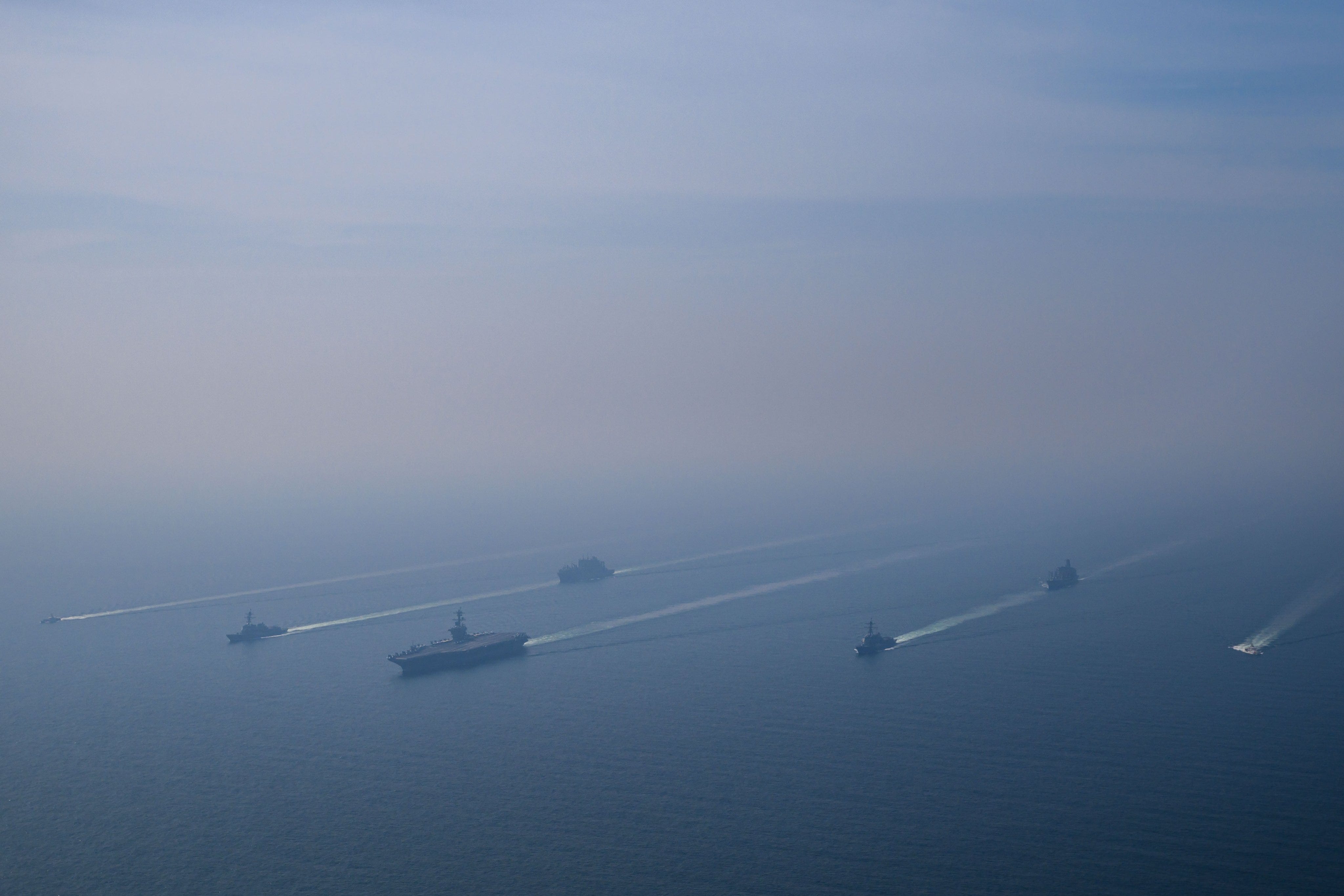
Right now in February 2026, the United States is assembling its largest military force near Iran in years: two aircraft carriers (USS Abraham Lincoln and USS Gerald R. Ford), dozens of advanced jets (F-35s, F-22s, and others), submarines, missile destroyers, and over 30,000 troops positioned across the region. This is the most significant buildup since the June 2025 bombing campaign that killed more than 1,000 Iranians.
Indirect talks continue in Geneva, with both sides noting progress—but tension is sky-high. Trump prefers a diplomatic deal yet warns of prolonged bombings if Iran rejects his demands. Experts close to the administration estimate an 80–90% chance of U.S. strikes soon.
Ukraine:
• Zelenskyy criticizes uneven pressure from Trump In an Axios interview during the meetings, President Zelenskyy called it “not fair” that Trump’s public demands for concessions target Ukraine far more than Russia. He hopes Trump’s urging for Kyiv to “come to the table fast” (said aboard Air Force One) is negotiating tactics, not a final stance. Zelenskyy stressed that any plan requiring formal cession of eastern Donbas territory—even areas not fully under Russian control—would face massive domestic opposition and likely fail in a referendum.
• Talks focus on technical details but yield little breakthrough Ukraine’s lead negotiator Rustem Umerov described the first day as intensive and substantive, with some progress on military issues and implementation mechanics. The second day ended early after two hours. Russian negotiator Vladimir Medinsky called the talks “difficult but businesslike.” No major advances on political or territorial disputes were reported. Anonymous Russian sources described the atmosphere as very tense over six hours of bilateral and trilateral formats. Parties agreed to resume the next day (Wednesday), but near-term breakthrough expectations remain low.
• Trump pushes for quick Ukrainian action Trump has repeatedly signaled that Ukraine must act swiftly to make the talks succeed, framing delays as a risk to any deal. His envoy has highlighted “meaningful progress,” but deep differences over territory, security guarantees, and Europe’s role persist as the fourth anniversary of Russia’s full-scale invasion approaches.
Iran:
• Trump’s core demands: Total surrender on three fronts Trump has set non-negotiable “red lines”: Iran must fully dismantle its nuclear program (including civilian enrichment), eliminate long-range ballistic missiles, and end support for proxy groups such as Hezbollah and the Houthis. Refusal ends talks—and opens the door to military action.
• Military positioned for rapid, decisive strikes U.S. forces are arrayed to launch coordinated attacks on Iran’s air defenses, command centers, missile launchers, and senior leadership in the opening phase. The strategy aims to “decapitate” the regime by targeting top IRGC commanders and political figures, hoping to trigger internal collapse or force a more compliant successor government—similar to recent events in Venezuela or the 2011 Libya model.
• Economic warfare already underway Intense U.S. sanctions have caused Iran’s currency to collapse, sent inflation soaring, and made daily life extremely difficult for ordinary Iranians. Administration officials openly state the goal is to generate enough domestic anger to spark protests or even an uprising against the government.
• Coercive diplomacy: The overarching strategy The U.S. combines overwhelming military presence, crippling economic pressure, and inflexible ultimatums to compel Iran to accept maximalist demands. If talks fail, the buildup enables a sustained, large-scale air campaign (weeks to months) rather than limited strikes.
• Diplomacy used to buy time and build leverage Negotiations serve as temporary cover while additional forces (including the redirection of a second carrier) are positioned. Trump wants a deal he can present as far superior to Obama’s 2015 JCPOA—but he explicitly reserves the right to strike once diplomacy “reaches its natural end.”
• Iran’s defiant response Supreme Leader Ayatollah Khamenei has vowed never to surrender Iran’s missile arsenal, which he views as essential for national defense. Iran has conducted live-fire drills in the Strait of Hormuz and warned it will retaliate forcefully—without the restraint shown in previous exchanges.
Economic:
• Oil prices surge past $70 on U.S. threats against Iran Brent crude jumped 4.8% to $70.50 per barrel amid repeated U.S. warnings of military action if Iran refuses a nuclear deal, pushing prices to their highest since July–August last year. Even brief disruptions in the Strait of Hormuz (through which ~20% of global oil flows) could send gasoline, heating oil, and electricity prices soaring worldwide, hitting consumers and businesses hardest in Europe and Asia. Rising energy costs fueled gains for U.S. oil giants like Exxon Mobil (+3.1%) and Chevron (+1.8%), while contributing to higher inflation expectations despite not directly affecting the Fed’s core measure. This came as Wall Street cooled after the latest Fed minutes revealed split views on rates, with some officials flirting with hikes if inflation persists.
• China enters Year of the Horse with optimism for rebound The Year of the Horse began Feb 17, 2026. Analysts expect a 4.5–5% GDP target and new five-year plan to boost consumption, high-tech self-reliance, and curb overcapacity/involution. Stocks are positive after ~21% Shanghai Composite gain in the past year.
• Europe risks economic disaster without self-driving tech in transportation
Bolt CEO Markus Villig warns Europe’s car industry (about 7% of the economy) is doomed without developing its own autonomous driving technology. Europe has already lost ground to the US and China in smartphones, social media, and AI, and now faces the same risk in transportation. To compete, Europe should partially copy China’s approach by protecting its market with regulations and limiting foreign giants. Bolt’s advantage: millions of daily rides collect valuable European traffic data to train self-driving systems locally.
• Alstom wins key rail contracts in Ukraine and Sweden In November 2025, Alstom signed a €470 million deal to supply 55 Traxx Hauler electric freight locomotives to Ukrainian Railways (deliveries from 2027). Separately, Alstom is delivering 25 Zefiro Express high-speed trains (250 km/h) to Sweden’s SJ (first in 2026, ~€650 million firm order). These moves reinforce Alstom’s position in Europe’s sustainable rail transport. Alstom has multiple joint ventures there (e.g., with CRRC subsidiaries), wholly-owned entities, and over 11,000 employees in China.
• Europe underestimates Russian sabotage and lacks political courage Retired U.S. Lt. Gen. Ben Hodges (former commander of U.S. Army Europe) warns in an Euromaidan Press interview that Europe treats Russian gray-zone sabotage—against ports, railways, airports, and undersea cables—as isolated crimes rather than part of an ongoing war. He criticizes treating each incident as a police matter requiring 100% proof, which is exactly what Russia exploits. Hodges praises Ukraine and Finland as models for societal resilience and total defense, noting Europe (plus allies like Canada, Norway, UK, Ukraine, and Turkey) has enough combined economic, technological, and military strength to counter Russia without heavy U.S. reliance. He urges more open civil defense exercises to build confidence, not fear.
Domestic:
• Fallout from Jeffrey Epstein-related documents release continues Newly released Justice Department files have renewed focus on Epstein’s Zorro Ranch in New Mexico. State lawmakers have formed a bipartisan “Truth Commission” with subpoena power to investigate allegations of sex trafficking, abuse, and possible criminal activity at the property. The probe examines local law enforcement’s role, survivor accounts, and gaps in state laws that may have allowed operations there. It follows anonymous claims in the files (including an email alleging foreign women were buried nearby) and comes as the DOJ releases millions more pages.
• Commerce Secretary Howard Lutnick’s ties to Epstein draw scrutiny In congressional testimony, Lutnick confirmed he, his wife, four children, and nannies had lunch with Jeffrey Epstein on Epstein’s private island in 2012 during a family vacation boat trip. He described it as brief and innocent with no ongoing relationship. However, the files show Epstein’s lawyer obtained and forwarded a resume (CV) for one of Lutnick’s nannies in 2013 (a year after the visit), with efforts to arrange a meeting. Lutnick said he had “no idea” about it and denied knowledge of how the resume reached Epstein. No wrongdoing has been alleged against Lutnick, but the details have prompted calls for more questions amid the broader Epstein file releases.
Trump is betting big: maximum pressure on Iran and a fast Ukraine deal to claim foreign-policy wins. If either backfires, the fallout—prolonged war, energy shocks, or stalled peace—could be severe. Experts warn the U.S. may be underestimating adversaries’ resolve on both fronts.
Will diplomacy prevail, or are we on the brink of multi-theater escalation? The next weeks will decide.
What do you think—deal or disaster? Share in the comments.
Zelenskyy says he’s ready for substantial compromises. What do you think China has offered him?
https://www.foxnews.com/politics/china-pledges-aid-ukraine-us-officials-warn-beijing-quietly-fueling-russias-war