US Wants Germany to Lead NATO Forces in Europe – Trump’s Envoy Drops a Bombshell
A historic shift or diplomatic pressure? Washington signals it’s ready to hand the keys of Allied Command to Berlin – if Germany is truly ready to step up.

At the Berlin Security Conference, Donald Trump’s newly appointed US Ambassador to NATO, Matthew Whitaker, stunned the audience with a provocative statement: the United States is eager for Germany to take over the position of Supreme Allied Commander Europe (SACEUR) – the top military post in NATO that has been exclusively American since the alliance’s founding in 1949.
Here’s what just happened and why it matters:
Tradition shattered in one sentence Whitaker declared: “I look forward to the day when Germany comes to the United States and says that we’re ready to take over the supreme allied commander position.” The current SACEUR, US General Alexus G. Grynkewich, only assumed the role in July 2025 – yet Washington is already talking about replacement.
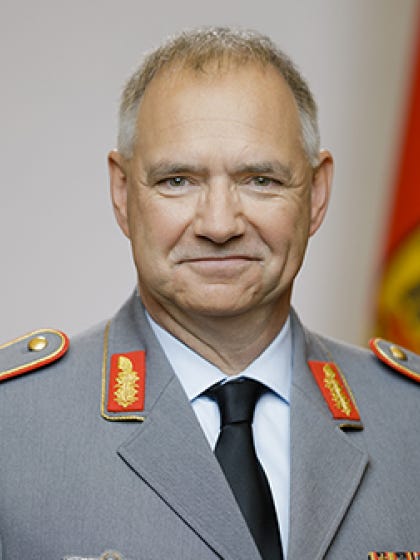
Berlin’s instant pushback Germany’s representative to NATO and the EU, Lt Gen Wolfgang Wien, immediately countered that while Berlin is willing to shoulder more responsibility, the SACEUR role remains “US territory” in German eyes. The room reportedly went quiet – then awkward.
The subtext everyone heard Whitaker’s remarks are the clearest signal yet that the second Trump administration intends to make Europe – and especially Germany – pay more than just 2% of GDP on defence. Handing over SACEUR would be the ultimate proof that Europe is finally serious about leading its own defence.
Perfect timing with EU moves The same week, the European Commission unveiled a €17.65 billion military-mobility package to upgrade bridges, tunnels, and ports so tanks can roll quickly across the continent. EU foreign-policy chief Kaja Kallas bluntly warned: “Weakness invites them to make their move” – meaning Russia.
The new transatlantic bargain For 75 years the deal was simple: America provides the commander and the nuclear umbrella, Europe provides bases and troops. Trump 2.0 appears ready to rewrite that contract – but only if Europe delivers on defence spending, industrial cooperation, and political cohesion first.
Whitaker insists he’s “a long way” from seeing Germany ready, but the message to Berlin (and Paris, Warsaw, and London) is unmistakable: the era of American automatic leadership of NATO Europe is negotiable – if Europe finally grows up strategically.
Whether Germany wants the job – or is even capable of taking it without fracturing the alliance – is now the most important open question in European security.
The baton has been thrown. Will anyone in Europe dare pick it up?